


Kris Davis Trio – ‘The Subtext’
The title of the upcoming album Lost In Geneva by the Kris Davis Trio apparently relates to the pitfalls and pratfalls of life on tour, in this case one of those mishaps – a missing piece of luggage or a cartographical abnormality or a simple journey gone awry – that always seems to occur at the very worst moment but can build a sense of camaraderie between fellow travellers as much as any seamless stopover or hotly received show.
Its opening track and lead single ‘The Subtext’ however refers to implicit or hidden meanings rather than a physical or material dislocation and it begins in media res or in the swing of things or with that state of crossed wires and confusion already in full flow. Is the pianist and bandleader Davis prating or just getting to the pith of things? We might never know for she is swiftly joined by Robert Hurst’s rubbery yet somehow skittish bass and Johnathan Blake’s quickening drums.
Davis’s anxiety only seems heightened over the first couple of minutes of ‘The Subtext’ but nodded and then urged on by the bass, the conversation seems to land on more of an even keel and the trio adopt a gentler tone. It doesn’t hold however and soon enough pendent or fraught chords from the keys are accompanying a boisterous if bravura display from Blake behind the drums. As the piece develops each player and especially the bandleader seems to enjoy the thrusts and the perilous frisson of such dynamic interplay, which is ripe with connective possibilities even if the interlocutors remain to some degree stranded or simply in the zone.
We’ve already had a first taste of Lost In Geneva whose title track seems to marry aspects of the torch song and that elegant but emotionally laden late-night atmosphere with something more nebulous or adrift. Suspended chords, lapping glissandos and halting piano runs cede to Blake’s deft brushwork which seems to effect a kind of doubling for its blend of softness and control and for the way that it pans the mix. That ambivalence is enhanced by varying cymbal washes and some scribbled brush strokes while the bass throbs and takes brief circuitous strolls. Even when they try for a groove before the close there is a sense of their efforts being forestalled or of the trio doubling back on themselves, but ‘Lost In Geneva’ still carries the affair off with some panache.
Lost In Geneva stems from several years of live performance with the title piece one of four songs that the trio played during their Tiny Desk Concert last year. Revelling in small discoveries, ‘The Subtext’ for its propulsive urgency and rhythmic complexity offers another point of introduction to the upcoming album, which is due out on 25 September on 4166 Records, the bandleader Davis’s own new imprint.

Olivia Rodrigo – ‘stupid song’
Olivia Rodrigo’s ‘stupid song’ is one of hapless infatuation and yet another of the heedless and agitated love songs which populate her heartsick, heat-struck new album You Seem Pretty Sad for a Girl So In Love. Co-written with the song’s producer Dan Nigro, she has credited Annie Ernaux’s short Simple Passion as a source of inspiration, a stark and slender account concerning the all-consuming nature of an ill-fated love affair with a married man.
But beyond literary passions and a popular canon which certainly includes Melodrama – especially ‘The Louvre’ with its fragrant obsessions and booming inner megaphone but also the dizzying memory spurts of ‘Supercut’ – this ‘stupid song’ reminds me of the musical theatre and its offshoots like the cascading drama of Stephen Sondheim’s classic Company or Stephin Merritt and the cult Magnetic Fields album 69 Love Songs.
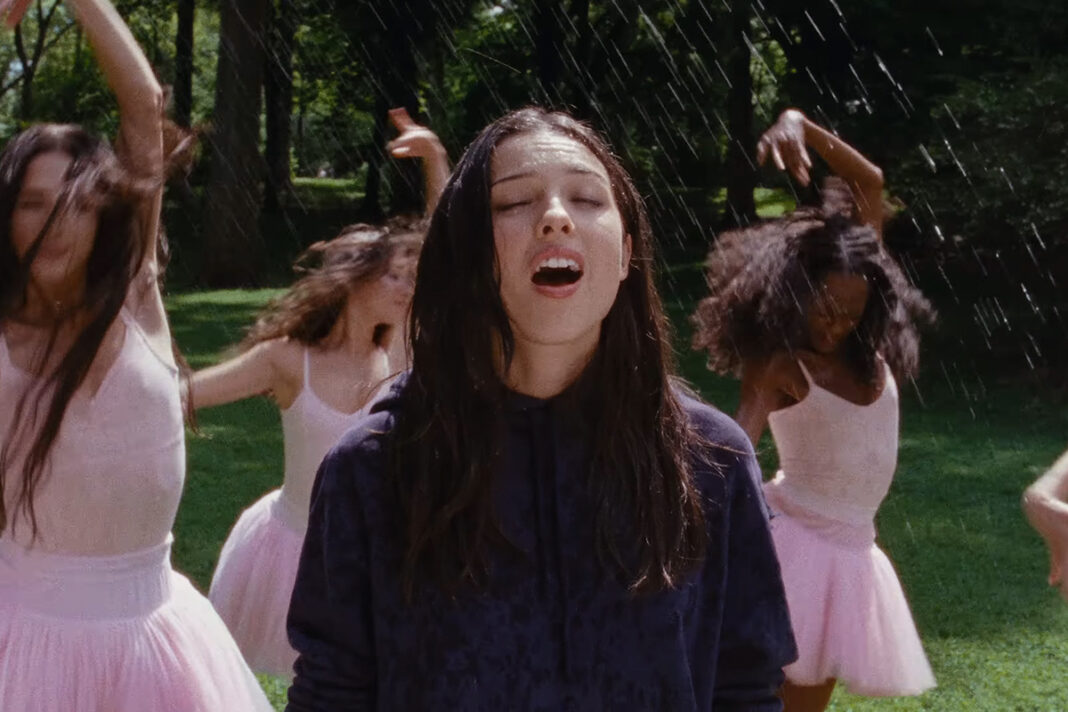
Listen to that repetition of long ‘a’ sounds in Rodrigo’s chorus through the rhymes and slant rhymes of ‘aflame’ and ‘name’ and ‘break’ and ‘say’ then compare them to the long ‘a’ of Amy’s manic Company patter as she pleads and confides to the gathered audience ‘don’t tell Paul but I’m not getting married today’. Tracks like the opener ‘Absolutely Cuckoo’ or ‘All My Little Words’ from 69 Love Songs also carry some of the same pitches and intonations, a similar lyrical involvement and the same delirious combination of the despairing and the enchanted and the whirligig. Meanwhile the music video for ‘stupid song’ spins through Central Park and other locales in New York City with coiled danger and reckless abandon, as Rodrigo scrapes knees and shares in a balletic embrace.
Henry Threadgill, Vijay Iyer and Dafnis Prieto – ‘I Wanted a Map’
The opening bars of ‘I Wanted a Map’ convey a marching band rhythm through drum rolls and jaunty piano keys before Henry Threadgill comes in velvety smooth, a presence though his provisional manner on the alto saxophone barely rises to more than a whisper or murmur. Spry cymbal patter from Dafnis Prieto allows the composition to surge before melding into a kind of incessant metallicism, like so many crashes of sheet metal with the resulting tremors.
Vijay Iyer then is not quite a cat on a hot tin roof but his lively work on the piano helps to build up a groove, and when Threadgill comes back in after that brief early foray the sound is hotter and louder and needs to be in order to crest the surrounding cacophony. Finally the cascading trio careen to a halt and we get a softer, more tender recapitulation of the theme in the closing seconds. ‘I Wanted a Map’ is the first single from Fifteen, the debut recording from the trio though the title refers to the number of years that they have been performing together on stage.
‘Fantasy’ is one of Julia Holter’s most propulsive songs, as the singer flits through a daydream whose gauzy textures and breathy vocals offer up a patchwork of promises which might still be kept. Beneath those billowing but translucent synths and a glimmering top line which is redolent of the vibes the beats of a bass drum vie with more clopping percussion, and in hallmark fashion there is a transportive moment come the midpoint which gallops swiftly back to the source.
A bronzed horn adds yet another tinge to the intoxicating atmosphere with ‘Fantasy’ the first single from Materia, an outpouring of that song from her previous album, the jazzy concoction Something in the Room She Moves. Still this particular ‘Fantasy’ straddles much of her past oeuvre, from the upturned palms of Tragedy to the cowpoke ‘Everytime Boots’ from Have You In My Wilderness to the blissed-out ‘Sun Girl’ or carnivalesque ‘Spinning’ from her last album, though here buttressed by motorik beats suggestive of the old Berlin and likewise strands of eastern European rock music.
Lido Pimienta’s music always hits like a tonic whether she is tangling with despair or lighting the torches of desire, mining Gregorian chant and the European classical tradition through woodwinds and timpani or unfurling cumbia, bullerengue and porro as part of a wider Afro-Caribbean reckoning while engaging more discretely with her Wayuu heritage.
On her song ‘Talento’ from the upcoming Caribenya she glides over a calypso breeze and stretches out the melodic line, pan flutes and neon-clad synths adding to the lush atmosphere and serving to counteract the tug of the low end as she tells a tale of dubious talents, the illusions and victim complexes that brought her and a former lover down.
Ken Pomeroy – ‘Late for the Sky’
Ken Pomeroy’s rendition of ‘Late for the Sky’ has a real indie vibe. The song – about lovers locked in desperate isolation at the end of their relationship, all of their words now spoken yet ‘still we continued on through the night / Tracing our steps from the beginning / Until they vanished into the air’ – is the title track from Jackson Browne’s third studio album but here Pomeroy summons the rawness of say Elliott Smith (or Waxahatchee on American Weekend) rather than soft rock or the spectral folk, wary country and even reddened dirt of her own work. This lid-rippled ‘Late for the Sky’ is a winning take from an artist who knows how to inhabit the music.
Laura Cannell – ‘Hollow Wings’
A five-year renovation of Norwich Castle restored much of the medieval character to the 900-year-old royal fort, restating its original floor levels while opening up the king’s chamber, chapel and grand banquet hall. A permanent Gallery of Medieval Life which houses 900 artefacts wound up inspiring Laura Cannell’s latest project, with the musician on a recent visit to the castle being especially taken by a couple of flutes, dating back to somewhere between the thirteenth and fifteenth centuries and both made from a swan’s wing bone.
The hollows of bones serving as musical instruments was the thought and theme behind the noted medievalist’s Sound Hoard, a new series of monthly releases which aims to explore the hidden resonances of treasures and fragments and objets d’art. While the first volume Sound Hoard I (Echoes of a Swan Bone Flute) makes fitting use of the bass recorder, its closing piece ‘Hollow Wings’ finds Cannell playing the octave violin, which really hooks itself into the surrounds. Her trademark overbow violin states more of a baroque melody, as all the while jagged synths imbue the piece with horror theatrics as though we were watching the slow-motion unfolding of some helpless chase. The music and its low end swells and congeals, leaving us in a tangled morass.