



For roughly half of the year I listened to everything, almost or near enough. Then I wilted, or the opposite of that, for come the summer I perked up in my stool and began to listen to summer ambiances like the chirping of birds, the splashing of hose pipes and water pistols or the sizzling of a barbecue. As the nights drew close I attended the annual jazz festival up here in Umeå in the north of Sweden, which is now marking its 58th year, but I also turned on a film, ate a bulle or sank into a warm bath and read a book.
The writer or critic just like most people in all walks of life pledges to do better next year: to do more things and meet new people, to find more time or be more concise with one’s use of it. The music scene remains mostly the same: upended by the streaming platforms, social media and other changes in distribution while the workaday artist struggles to make it through.
Scenes are less embedded in genre and locale, the landscape is fractured and now a deluge of artificial intelligence threatens to add to the vagaries of discovery by TikTok or lo-fi playlist. At the same time the truism remains true: lower barriers to entry in terms of expertise and production, cultural cross-pollination and some mixture of inspiration, perspiration and enduring collaborative spirit all mean that never before have we been treated to so much good music, so long as we are willing to listen and know some of the places in which to look.


Adam O’Farrill – For These Streets
As the sensuality and bitterness of Miller and the tender romanticism of Chaplin’s little tramp began to permeate his dreams, O’Farrill embarked on a fuller exploration of the decade’s literature from the experimental wash of Virginia Woolf’s self-styled ‘playpoem’ The Waves with its six soliloquising figures to the poetry of Octavio Paz and music from Igor Stravinsky to Olivier Messiaen to Duke Ellington. In fact as he toured from city to city as part of an ensemble led by Mary Halvorson, it was the era’s classical music which he frequently imbibed which bears sweet fruit on For These Streets as the opening composition ‘Swimmers’ features melodic lines drawn from Stravinsky’s last European work Dumbarton Oaks while other pieces interpolate or are inspired by Messiaen’s organ essay Diptyque, Maurice Ravel’s jazz and Basque-infused Piano Concerto in G major and Carlos Chávez’s ten preludios for piano.

Angel Bat Dawid & Naima Nefertari – Journey to Nabta Playa
‘Procession of the Equinox’ – the first single from the album which the duo released in accordance with the spring equinox on 20 March – seems to expand on the theme from ‘Bishmillah’ as the head is hammered out on the piano accompanied by shakers and Dawid’s moaning or ululating cries. Nefertari comes in on another set of keys and starts elaborating around the theme, which recedes into the background like a flickering shadow on the walls of a cave as a plethora of small percussions including shakers and chimes plus the springy and suctiony sound of the mouth harp or tempered mallet percussion continue to add texture in the manner of slubbed fabric.

Whenever jazz musicians want to ascend a spiritual plane or explore more diverse instrumentation, the seventies stint of Don Cherry proves a wellspring of inspiration, as does his work with the Codona trio where he played the donso ngoni alongside his trumpet while Colin Walcott handled Hindustani classical instruments like the sitar and tabla and Naná Vasconcelos continued to introduce the world to the single-string Angolan or Brazilian berimbau. Angel Bat Dawid and Naima Nefertari, a Cherry family relation, plus the newly formed Scandinavian group Cosmic Ear separately breathed new life into that terrain in the spring of this year.

Aruán Ortiz – Créole Renaissance
Musically as he continues to listen out for correspondences which criss-cross the Atlantic those gaps between the keys which one can hear being navigated on the album opener – aptly named ‘L’Étudiant noir’ – or on ‘Seven Aprils in Paris (and a Sophisticated Lady)’ are likened in the liner notes which accompany Créole Renaissance to what the French writer Édouard Glissant has called ‘determining gaps’ or the ‘right to opacity’, pointing to the distances between peoples and cultures and the need for both an understanding and acceptance of difference. Brent Hayes Edwards who wrote the liner notes suggests some of the tonal or stylistic leaps which Ortiz is capable of taking when he compares his ‘prodigious technique’ to the compositions and playing of Arthur Schoenberg, Olivier Messiaen and György Ligeti on one side of the water plus Bebo Valdés, Don Pullen and Cecil Taylor.

So from the relatively sober and summatory execution of ‘backslide’, the first flurry from hexed! features fierce vocal deliveries which lie somewhere between crass punk caterwaul and the barking cries of someone who is suffering a nervous breakdown in a supermarket parking lot. After pondering ‘Where to begin?’ the album opener ‘i am the pipe i hit myself with’ offers various iterations of the shit she used to say before outlining suggestively how she got bewitched, while the withering and sexually frustrated ‘peach’ makes a terrace chant out of the phrase ‘Never slept through the night’ amid thwomping electronics and the odd scatting accompaniment and the first-look single ‘off to the ESSO’ pushes and pulls between Manchester and London while embedding the vernacular of the north, which apparently hasn’t changed too much from my own upbringing in Yorkshire as aya mimes the quintessential put-down ‘you’ve dropped your fucking gay card’. Through bleached or reddened eyeballs, one way or another aya makes you look.

Ayumi Ishito – Roboquarians, Vol. 2 (feat. Kevin Shea & George Draguns)
At its most sinister the new album by Ayumi Ishito might evoke a dystopia which already seems to be creeping over the horizon, a seeping and bubbling, satiny black ooze which lurches ever closer as we continue to go about our business, doing the weekly shopping and picking up the kids from school or walking the dog in some green-fringed park of the elevated variety, like the Coulée verte René-Dumont, the High Line, Bloomingdale Trail or Seoullo 7017 even while an army of drones with their prying cameras and officious manners begin to swirl about in the dwindling sky above.

Benjamin Lackner, Mathias Eick, Mark Turner, Linda May Han Oh and Matthieu Chazarenc – Spindrift
Benjamin Lackner plays the piano with a plangent grace at the head of a new ensemble on his latest album Spindrift for ECM Records. Only the trumpeter Mathias Eick remains from his debut ECM offering Last Decade, while the pianist also reconnects with Matthieu Chazarenc on drums who was a member of his earlier trio. Eick with the tenor saxophonist Mark Turner comprises a burnished horn section which tends to move as a unit, whether stately and barge-like as on the standout ‘More Mesa’ or chasing and gambolling like on ‘Chambary’ where the tenor traces and giddily trails after the trumpet.
The dextrous and in-demand bassist Linda May Han Oh returns to the label following Compassion with Vijay Iyer and Tyshawn Sorey which dropped around this time last year, while Chazarenc on the drums winds deftly through each track, a thread strong enough to gird each composition and fine enough to fill every gap with enough elasticity to provide a little stretch. With an elegant sense of swing that starts with a shimmy of the hips and Lackner’s keys sweetening the earthy manner of the ensemble, the second half of Spindrift becomes more muted and urbane, sometimes even forlorn and a little bit gaseous as brittle drum sticks and the creeping tension of the bass vie with muffled martial tones from the horns, especially on ‘Murnau’ which sounds like a brass band playing an elegy.
Various albums this year successfully channelled the third stream, like Under the Surface by the Julia Hülsmann Quartet, Topos by Sokratis Sinopoulos and Yann Keerim and a new take on Brahms by Zehetmair Quartett, all on the vaunted ECM Records, or Tempo Firmo by Fabrizio Cucco and Shakkei by Alexandra Grimal and Giovanni Di Domenico on 577 Records and Relative Pitch. Other examples headed up by Dino Saluzzi, the duo of François Couturier & Dominique Pifarély, Meredith Monk and Michael Bisio – even by Ingrid Laubrock and the key partnership of Ivo Perelman and Matthew Shipp – appear in due course across this list.

‘Counterclockwise’ juxtaposes another slippery or sputtering encounter with other instances of prescribed or circumscribed sleep, closing with a cycle of CIA torture and ‘Corinthians’ draws from that famous phrase about seeing ‘through a glass, darkly’ from the Pauline epistles as woods pictures himself as a ‘Scarecrow in a field, watching the spectacle’ which unfolds all about. The track is doom-laden but it seems to dwell mostly upon a shattered social media landscape where we might scroll past the ‘uncanny valley’ of artificial intelligence through the horrors being perpetrated in Gaza as woods with a rejoinder adds ‘Best believe them crackers won’t make it to Mars’.
The best hip hop this year seemed radically diverse even as it played out in the backwoods and on the margins. Beyond the spellbinding GOLLIWOG and its steeped horror lay the shifting rhymes and soulful collaborations of PremRock on Did You Enjoy Your Time Here…?, the scabrous diatribes and sloshing chorales of Infinity Knives and Brian Ennals on A City Drowned in God’s Black Tears, the trippy self-titled album by Toxic Crusaders and from Uganda the fearsome MC Yallah who reunited with the producer Debmaster for the snare-like deliveries and stonking beats of Gaudencia.

Camila Nebbia – rastro o vacío
It is that eerie quality on ‘El color de un río desconocido’ – with its whimpering pulses and foreboding stretches of time – which adds a narrative element to what at first might sound like a series of timbral exercises or simply like a talented and daring artist blowing the dust out of her instrument. Nebbia overblows her tenor to add shrill and rippling overtones to her composition whose final moments also shudder through the odd growl. ‘Helar’ on the other hand is a rowdy but urbane blues. The close miking of her saxophone allows the listener to hear every gust of her instrument and all of her fingerings, imbuing many of the tracks with a kind of percussive underbelly which on ‘Imagen velada’ for instance might sound like a form of shamanism or Morris dancing, as though she were playing while adorned with cymbals and bells. Then on ‘Volcar’ she pares everything right back down as drier puffs like wind and leaves rustling through drain pipes and tinnier pulses again conjure an atmosphere which is creepy and furtive.

That charming ‘Love Train’ which I first heard down in Studion gets a fuller treatment on TRACES, as Bothén who played on the original and is therefore charting familiar terrain opens with a fine piano solo, glimmering and passionate and holding the space. After a few roiling keys, congas and sloshing rattles and shakers sketch out the rhythm of the piece, as Gustafsson who alternates between flute and tenor takes a sinuous and river-bent course with a few shrill moments, soon joined by the trumpet which arcs above his woodwinds in its role as bugle or beacon. There are all manner of small percussions dotted throughout the composition and Gustafsson engages in some rasping gusts on the tenor saxophone, as the middle section also abounds in shrugging shakers and twinkling chimes. Eschewing the celestial yearning of the original which featured Tibetan bells and Rosengren on the tárogató, this ‘Love Train’ is swampy and searching, with few ensembles able to develop and ride out a groove quite like this.
On the other hand ‘Right Here Right Now’ is perhaps a reference to Cherry’s relatively unheralded 1977 effort Hear & Now, a bridge between Brown Rice and the Ornette Coleman riff Old and New Dreams. A race between the percussion and the donso ngoni saturated by misty synths opens out into a series of butting contests and freeform solos on the saxophone and bass clarinet, warping time and resolutely shrugging off a few dolorous sentiments to maintain its driving and sometimes bristling character, adorned by honks and chimes and some eerie, overhanging drones from Kajfeš who operates from behind the synths.

Trained as a classical pianist, on her new album Road to Spring the composer DaYe pays tribute to her hometown of Yangzhou, which is situated on the north bank of the Yangtze and is known as the ancient birthplace of the Grand Canal which was built to connect northern and southern China, as well as for its traditions of poetry, lacquerware and jade, its gardens and alleyways, bath houses and pavilions and the picturesque Slender West Lake with its weeping willows, bridges and temple.

Dino Saluzzi – El Viejo Caminante
Despite its reputation for a certain mournfulness the bandoneon is a diverse instrument, capable of resembling not only other concertinas and free reed aerophones like the accordion but in the opening bars of ‘Tiempos de ausencias’ a church organ before Dino and José deliver a fine melodic duet between father and son, as Young’s strumming in the background adds depth to the composition. Then the guitars dovetail and take a deft, winding course like two birds frolicking in flight or a serpentine jaunt through a city’s back streets and alleys with Young’s pointillist plucks matching José’s smoother divertissements. Those snatches of the sacred should come as no surprise since the bandoneon was devised by its creator Heinrich Band as a religious instrument for use in churches without organs, growing in popularity as tango began to take off in Argentina and Uruguay around the turn of the twentieth century.

In the opening moments of Rádio Libertadora that twisted branch of baile funk or funk carioca which is known as bruxaria manifests itself through a warped and menacing music box melody which seems to function like a haunted come-hither. It carries a lulling quality at the same time as it portends the drama to come as the track soon breaks out into a dizzying array of hyper-shrill traffic stop whistles and punishing sub-bass beats.
‘Esta no ar a Rádio Libertadora’ has already by way of a prelude or epigraph introduced one of the record’s core themes as its opening sound, a sonar signal, gives way to a sample from a speech by the Brazilian militant figure Carlos Marighella, who founded the Marxist-Leninist urban guerrilla group Ação Libertadora Nacional before being killed in late 1969 during an ambush by the police. The speech as delivered by Marighella was originally broadcast during a clandestine takeover of the state-owned Rádio Nacional earlier that year, while its appearance at the outset of this album is soon shrouded by siren alarms and snarling laughter on a track which features the rasping vocals of MC Renatinho Falcão.

François Couturier & Dominique Pifarély – Preludes and Songs
Preludes and Songs opens with ‘Le surcroît I’ which interpolates material from the Impromptu sessions, as does ‘Le surcroît II’, another brief abstraction, and the penultimate track ‘What us’. Yet it is their adaptation of Jacques Brel which really establishes the mood of the album, immediately adding some drama to proceedings as over the cinematic expressionism of Couturier’s trepidatious yet unsparing keys, Pifarély’s violin paints in chiaroscuro whose bold contrasts between light and dark echo the sweeping motions of Brel’s poetry, from the tempestuous storms of its twenty-year relationship to the clear dawn which beckons forth another livelong day.

Fred Moten & Brandon López – Revision
On the opening track from Revision, which marks the debut of Moten and López as a duo, the poet recites the text of ‘harriot + harriot + sound +’ from his 2016 collection The Service Porch, the third and final volume of a trilogy which also includes The Feel Trio, named after a series of late-eighties and early-nineties live collaborations between Cecil Taylor, Tony Oxley and William Parker, and The Little Edges.
Moten recites the poem in full then backtreads, reeling off the same sentences in reverse before picking out individual words and phrases with the same short envelope and the same plangent, rebounding and moonlit quality of López’s bass, which carries here the piquancy of a zither. The poem is worth recounting as it demonstrates Moten’s penchant for a kind of lapping and overlapping, syllabic sound poetry plus his habit of circling names like ‘normandie’ or ‘tsitsi ella jaji’ for their connotative possibilities as well as for their sonic resonances. Tsitsi Ella Jaji is a former colleague who works as an associate professor of English at Duke University and has published the book Africa in Stereo: Music, Modernism and Pan-African Solidarity and the poetry collections Mother Tongues and Beating the Graves, while from a limpid moon and the glide of ‘atlantic situations’ the phrase ‘thingly jingly nette’ almost reads like a synonym or tautology of ‘frayed means’, giving physical form to the concept of limited resources while at the same time imbuing that concept with pliability and a linguistic abundance.
The pitch and time of luters
bring atlantic situations
all the way across. the moon
thing is a water thing at
midnight and the table
burst with variation.
the beautiful riot say
I’m not like this and
walk away embrace and
dig up under normandie.
what’s a black singing body
got to do with it? look at
my shoes. the setting partly frees
the dissonance in compensation
and tsitsi ella jaji frees the rest.
frayed means are a thingly
jingly nette; you can’t help
yourself if you take too much.

Heinali & Andriana-Yaroslava Saienko – Гільдеґарда (Hildegard)
With the two long tracks filling up both sides of the record, ‘O Tu Suavissima Virga’ from a responsory which emphasises the radiance of the Virgin Mary opens with staticky percussion which momentarily traces the shape of a heartbeat before gathering pace and blurring into one steady drone. Singing in more of a murmur or whisper, Saienko’s vocal evokes Björk on the coyness of ‘You’ve Been Flirting Again’ or on Medúlla songs like ‘Öll Birtan’ and ‘Sonnets/Unrealities XI’, which is a setting of an E. E. Cummings poem. Shortly before the twelve-minute mark her voice becomes more forceful and insistent, with the last four-and-a-half minutes of ‘O Tu Suavissima Virga’ a light-bearing beam of synthesizer with a bit of fuzz around the edges.

The Hemphill Stringtet Plays the Music of Julius Hemphill
The Hemphill Stringtet Plays the Music of Julius Hemphill commences with a memorable take on ‘Revue’, the opener and title track of the World Saxophone Quartet’s fourth studio album which was released on Black Saint in 1982. In contrast to the somewhat downbeat tenor of the original, which opens out into a loosely tethered display of squawking counterpoint, here the Hemphill Stringtet’s rendition is almost a hoedown as they take up with gusto the theme, a five-part motif which is alternately played arco and pizzicato by Reid on the cello, who gives both a lilting and languorous quality to the piece. The violins of Stewart and Bardfeld plus Griffin’s viola link arms for hesitant harmonies and swooning ditties before peeling off from the midway point of the composition, which touches upon George Gershwin and other modes of rootsy pastoralism while always returning to that rubbery and ebullient main theme.

Their work carries the rural twang and bum philosophical bent of Modest Mouse, especially on some of the opening tracks like ‘Bones’ and ‘Magnolias’, which fortifies a burbling riff with some late-fifties imagery and figures of speech from the opening ‘Babe, refrigerated truck took my baby’ to the answered question ‘Have you ever seen a magnolia flower? Well, they’re pretty lewd’. There is also the trenchant lyricism and caustic or hollowed out atmosphere of solo Lou Reed and a synthesised form of Allen Lowe’s historicism, with the jazz veteran on America: The Rough Cut summoning a ragtag blend of honky-tonk and gospel music plus minstrelsy, medicine shows with their hayseed acts and miracle cures and one-chord ruminations which prefigured the blues.

Indigo De Souza is part of a newish breed of gutsy and emotive singer-songwriters whose genre-bending and colourful personalities sometimes seem to mask the fact that they excel at rock and roll. Like some of her peers in say Yves Tumor and Nilüfer Yanya, she has shown that she can more than handle plucky rockers from ‘You Can Be Mean’ and ‘Always’ on her last album to the scorching ‘Heartthrob’ here. Yet the most interesting moments on Precipice seem to come when she sloughs off some of that energy and embraces more quizzical and meditative airs, both lyrically and in terms of her song structures. ‘Be Like the Water’ with its Heraclitean sense of flux sounds like something by Sufjan Stevens or Talking Heads at their most limpid on Speaking in Tongues, as the singer cooly reminds herself ‘I can leave if I want to / And I don’t have to say why’.

Ingrid Laubrock – Purposing The Air
Purposing The Air opens with the last of the recorded duos in Fay Victor and Mariel Roberts, as on ‘Koan 28’ the freeform vocalist resolves the phrase ‘things changing into / what they are’ while whispering and susurrating over a droning cello. Then on ‘Koan 13’, an early standout, Victor recites with elasticity and circularity the lines ‘catch the ball / and now I throw it’ over the squealing of rubbed strings before ‘Koan 55’ rolls in ‘broken glass’ and other sibilant shards of expression. From short plucks and more jagged arco passages, beneath the ‘leaking container’ of ‘Koan 15’ the whinnying bows of Roberts sound almost like a harmonium or pump organ while ‘Koan 47’ is more bratty and punky in its delivery, scrawled over the cathedral of a doom metal backdrop.
In pointillist fashion ‘Koan 11’ traces the shape of a ‘splashy curve’ while holding the crest of the wave at bay as Victor’s pregnant scats serve to demarcate the composition. If the track largely captures the dashing and sun-kissed style of the two players with their backgrounds in free improvisation – as Laubrock wrote fully notated pieces or provided her performers with looser word scores while also affording the singer enough room for a little extemporisation – then ‘Koan 38’ is more hermetic and defiantly melancholic as an enveloping drone waxes and wanes between growls and gulps, starts and sighs and the more gnarled or bellows-like grumbling of the cello, before Victor repeats ‘the sun pours through the window / but I won’t let a drop touch me’, a finely suggestive lyric.
Lots can happen within the brief one-to-three minute span of these tracks. On the babbling ‘Koan 46’ flayed strings peel off in all directions, while ‘Koan 39’ is one big shush. And if the vocal line on ‘Koan 38’ reminds me of Björk’s voice-led album Medúlla then the repetition of the word ‘holding’ over the looped cello of ‘Koan 43’ feels redolent of Grouper in more than name, on a project with few obvious touchstones or counterparts whose compositions are more than vignettes or variations but still might hew as closely to classical music with its waltzes and mazurkas as to jazz, while suggestively calling to mind everything from the 69 Love Songs of the Magnetic Fields to John Zorn’s voluminous and star-studded Bagatelles.

Ivo Perelman & Matthew Shipp String Trio – Armageddon Flower
What we get on Armageddon Flower is something in between, often oblique yet deeply absorbing, beginning with the opening track ‘Pillar of Light’ and its murky, mottled yet thematically rich take on third stream. ‘Tree of Life’ features some deft opening interplay between the saxophone and viola before shifting between baroque sensitivities, emphasised by the plaintive tone of Maneri’s strings, and more dense or menacing contemporary passages as the musicians seem to inhabit a world of tension and strife, falling in with one another harmonically while resolutely or even heedlessly charting their own course. On these opening couple of pieces the altissimo of Perelman screeches and wails or carves out shafts of light, rending holes and illuminating the compositions, while Shipp’s whole tones offer an air of at times wistful ambiguity and his cluster chords add an ominous emotional charge.

JJJJJerome Ellis – Vesper Sparrow
‘Vesper Sparrow’ dissolves into a wash of distortion while ‘Savannah Sparrow’ begins with a crude laugh and the whirring of a pipe organ, over which Ellis layers the muffled register of his tenor sax. Padding out a melody, he steadily attains a fuller tone. Noting that his vocation as a musician essentially began when he started to improvise along to John Coltrane and Billie Holiday records, Ellis on the tenor saxophone carries the lyrical mournfulness of say a Ben Webster or even Stan Getz while possessing a sparer manner and a full and fuzzy tone. At the same time he attributes his current affinity for keyboards to old tales of his grandmother, who once performed as a pianist and organist, as well as his enduring maternal family ties to the church.

Jolie Holland & Max Knouse – Wolf Dispatch
Described as a ‘spare little thing’, on Wolf Dispatch the musicians Jolie Holland and Max Knouse pay tribute to Michael Hurley who died earlier this year at the age of 83. Cosy with the odd cackle of laughter and a suitable chill when their chosen material leads them to more feral or supernatural ends, the seven songs selected from the slackened oeuvre of the outsider folk icon stretch from favourites like ‘O My Stars’ and ‘I Paint a Design’ – from the acclaimed Snockgrass and the late-eighties offshoot Watertower – to the hitherto unreleased ‘B Bottom Girl’ which Hurley asked Holland to sing after the pair became friends and collaborators, with Holland appearing on his record Land of Lofi back in 2013.

Befitting the album’s title, ‘Gae’ is especially shamanistic from the moment of its slender outset. Reedy and wafting blows of the horn carry the scent of incense while bells twinkle in a diffuse light, on a track which is still diaphanous but sounds somehow cloistered. In a similar vein the opening moments of ‘Mul’ remind me of the album Miserere by Chad Fowler, George Cartwright, Chris Parker, Kelley Hurt, Luke Stewart, Steve Hirsh and Zoh Amba for Mahakala Music with its tenebrae and strepitus, its noxious vapours and wine-soaked bars or rain-soaked streets. This one however becomes by turns a bit more boisterous, through pot-and-pan percussion and buzzing, zagging lines of saxophone.

‘In the middle of our life’s journey, I found myself in a dark wood where the straight way was lost’ begins the Divine Comedy and Livanskiy an artist preoccupied with forest imagery early in Myrtus Myth finds herself rapt in familiar terrain. ‘Farewell’ contains visions of foliage receding into a damp fog but Livanskiy embraces the past and duly forgets it with a spirit of defiance as Flaty through a few muted horns and shimmering synths begins to construct an enveloping soundscape. Then on the lead single ‘Anna’ the producer summons up melodies redolent of Fleetwood Mac in their Rumours era plus Phil Collins and the gated reverb of his drums as the singer recalls one autumn in an attic, the dust still sparkling in the sunlight by way of a heartfelt tribute to an old friend.

The album opener ‘great guilt’ abounds in pummelling drums and swirling, all-encompassing waves of feedback as a few splintering piano keys waft through the murk. At once a bombastic introduction to the record and a token of what’s in store, ‘great guilt’ even approaches the bravado of arena rock while featuring the album’s only sustained vocal as Klein sees ‘blood on the flag, smoke in the mirror’ and amid other strained entreaties prays for a blessing ‘but the odds won’t stack’. While last summer’s marked offered ‘breaking news’ as an endlessly scrolling chyron shorn of content here Klein subverts a civil rights slogan by stressing ‘no pain, no justice’ but there is no framing or reframing of the context and no search for meaning as the artist doubles down on the guitar and begins to drift off into the aether.

The compositions on Piriforms range from the lapping drones of the title track – which features the four voices of Guédon, Lamb, Lane and Saylor – to the shorter phrases and more elevated harmonies of ’72 Verses studies’, a duo for Lamb and Holter which Steenberge has adapted from the 72 Verses for St. Martial of the French monk Adémar de Chabannes. Dated to the year 1029 and based upon the monk’s hagiographies of Saint Martial which falsely claimed that he had been baptised by the apostle Peter, in her role as a researcher Steenberge has analysed the original composition by Adémar, which forms an acrostic and has been described as two variations on the same monophonic chant, with Steenberge concluding instead that the 72 Verses is indeed polyphonic.

Lia Kohl & Zander Raymond – In Transit
As one might expect from these two artists, the sound is gentle and enveloping but never short of a furtive melody or some surface interest. ‘What they said about’ trundles and burbles along at moments reminiscent of Sung Tongs by Animal Collective or the Gang of Four and Buddy Ross samples of the Blonde closer ‘Futura Free’. And on ‘A duck with green feet’ those mossy palmates are dangled over a dripping sink for a quick wash amid modular blips and beeps, until the atmosphere of the piece turns more meditative, almost with the resonance of a singing bowl before we head back out into the open air. At times the season feels autumnal or captures the crispness of high summer after a spattering of rain, on a record which is suffused with light like a pointillist bokeh image or komorebi, the Japanese term for the sun as it flickers through the leaves of a tree.
In Transit was just one moment or aspect in a busy year for Kohl, who collaborated with Whitney Johnson over the four variegated and meditative tracks of For Translucence and played cello accompaniment on Macie Stewart’s acclaimed When the Distance is Blue while commencing a new trio project with Stewart and Johnson for International Anthem. She also put together a collection of vignettes called Various Small Whistles and a Song, while in May her site-specific piece Music for Union Station suffused the ears of bench dwellers and bustling passengers inside Chicago’s iconic rail terminal and its statuesque Great Hall.

Los Thuthanaka – Los Thuthanaka
‘Jallalla Ayllu Pahaza Marka Qalaqutu Pakaxa’ gallops forth, ‘Ipi Saxra’ builds a stacked atmosphere behind an insistent patter of sampled interjections and exhortations while ‘Phuju’ sounds more folksy with its wriggling melody and clopping percussion. ‘Apnaqkaya Titi’ with its guttural, even orgasmic groans draws from caporales the vigorous Bolivian folk dance before ‘Awila’ teases out one of the latent preoccupations in Chuquimamani-Condori’s work, old conflicts between Bolivia and Peru here related to ownership of the kullawada dance, whose whirligig motion carries rancour and menace while still seeming to set the scene for some kind of personal or cultural rapprochement if not quite a mutual display of goodwill.

Lucy Liyou – Every Video Without Your Face, Every Sound Without Your Name
Every Video Without Your Face, Every Sound Without Your Name is a beautiful, graceful and emotionally potent record. It opens on a note of musical theatre fantasy which contains the record’s eternal and selfsame gesture of ‘please stay’. With a self-deprecating air, its first lines are ‘to leave you alone / is nothing more than a favour’ but there is scarcely a trace of irony as Liyou’s unadorned vocals, more than a whisper but still with the hint of a quaver, express a luscious yet needy desire as though each word were measured and uttered through moistened lips. ‘But the more I wait / the more I want you’ she confesses as rustling birdsong and a few electronic patches seem to settle ’16/18′ in a continuous present, even as the song swirls and whorls to its lavish, pleading climax.
From birdsong to something more nocturnal, on the standout ‘Credit’ the suggestion of crickets and burgeoning synths present a kind of looped moment, that of a curtain perpetually being drawn onto the possibilities of the night. ‘Do you want me now / do you want me now?’ the singer repeats, asking and needing or giving without want of a receipt, on a song which inhabits the theatricality of pansori but also carries the neo soul sultriness of say D’Angelo on his ‘Untitled (How Does It Feel)’ or even the forthrightness of En Vogue on their classic ‘Don’t Let Go (Love)’.
An audience gently applauds in the middle of this midsummer night’s dream, as Liyou uncannily blends a personal address, staggering in its intimacy, with aspects of stage performance in the process managing to ceaselessly transcend both forms or worlds. In the end her question and her scarcely audible closing request to ‘bear all / look at me’ seems addressed to us all, as from cockeyed glances to a smatterings of acclaim we yearn to share in her rapture.

Luke Martin – To Be Worthy of Pessoa
The instrumentation never feels hurried and the readings from the text arrive sparely yet there is a sense of constriction and preoccupation which stretches across both sides of To Be Worthy of Pessoa, as Martin’s compositions echo the poet’s fragmentary text by appearing to have lots on their mind with respite no more than a mirage on the horizon. The strings and vibraphone of ‘The Air is a Concealed Yellow’ play out over an indiscriminate rustling or whirring sound, with the occasional bump or scratch for good measure as Martin by way of Pessoa and Soares relates lying in bed and drifting off into dreams:
unaware, apart from the sense of comfort, of the existence of my own body. I feel ebbing away from me the happy lack of consciousness with which I enjoy my consciousness, the lazy animal way I watch in between half-closed eyes like a cat in the sun, the logical movements of my untrained imagination. I feel slipping away from me the privileges, the penumbra, the slow rivers that flow beneath the trees of my half-glimpsed eyelashes, and the whisper of waterfalls lost among the sound, the slow blood pounding in my ears.

Brown on Rihla seems to syncretise these influences like never before, as he unfolds a maximalist offering which bears traces of neo soul, yacht rock or acid jazz as the artist for the first time foregrounds his own vocals. Gauzy and heavy as it doubles down on a neon-clad, Blade Runner aesthetic, the album still features a few guitar licks redolent of North Africa and the Middle East, but most of all Rihla reminds me of the works of Yves Tumor and AraabMuzik while probably containing plenty to please fans of The Weeknd at his wooziest like on his unparalleled debut House of Balloons.

Marcus Gilmore – Journey to the New: Live at the Village Vanguard
By the seventh minute of ‘Voltaire’, the opening track from the drummer Marcus Gilmore’s album Journey to the New which was captured live over successive nights in the summer of 2024 at the Village Vanguard, the ensemble has established such a slow-moving and thoroughly beguiling air that almost anything else would feel like a jolt or a rupture. Through the small but sinuous strums and blooming harmonics of Emmanuel Michael on the guitar and Burniss Travis on the electric bass, they have been busy shaping spectres and tracing phantoms or effecting ripples in pools with the vaporous limpidity of a Loren Connors.
Then suddenly those harmonics start to hum and we hear the first dull thud of percussion, a prelude to an outpouring from the full ensemble as Gilmore’s cascading and crashing cymbals gush out both over and under Morgan Guerin’s electronic wind instrument and the rumbles of Rashaan Carter’s double bass.
Given the instrumental palette and the prior half of the composition, it’s a more brassy and propulsive sound than one might expect as Guerin – the 27-year-old multi-instrumentalist who has contributed winds, bass and electronics to albums by Esperanza Spalding, Terri Lyne Carrington and Tyshawn Sorey – ribbons a solo with arpeggios then cedes to the piano of David Virelles, which emerges from beneath, slender and gleaming, before the guitar and a more loping double bass lead us out of ‘Voltaire’ more in the manner of an ellipsis than a witty riposte.

Marianna Maruyama & Hessel Veldman – Salt
She proceeds to list the various jobs which she once passed through in Tokyo, from general book handling to lipstick testing and serving as an English teacher or tour guide, then wine tasting and landscape painting or accompanying people to restaurants, karaoke and onsen, including within the confines of the list the no doubt onerous role of daughter-in-law before she strikes upon what seems like the most affective of all these roles, as she remembers providing the female voice for an automated water cooler. All the while on ‘Viktorija’ the production of Hessel Veldman whips like a vague and unsolicited wind or maybe even with the muted clamour of a dental suction device, on a track which gestures towards sensuousness without gleeking as Maruyama speaks sedately with barely a trace of saliva.
Some of the best experimental records of the year were spoken word performances, including Salt by Marianna Maruyama and Hessel Veldman or in jazzier contexts, I’m Just Say’n where the sworling winds of Mats Gustafsson encircled the poetry of Joe McPhee and Revision by Fred Moten and Brandon López which also stars on this very list. In other realms or zones The Film by SUMAC and Moor Mother plus albums by Nate Wooley, Hourloupe and the drank duo of Ingrid Schmoliner and Alexander Kranabetter continued to explore the potentialities of the form.

Mark Turner – We Raise Them To Lift Their Heads
More than yearning, the opening piece ‘Slow’ on We Raise Them To Lift Their Heads carries a brisk and searching tone, as though Turner was at the same time saluting the dawning of a new day and playing simple exercises as he runs up and down his horn, with the result blending a consequential warmth with traces of the workaday and scholastic. ‘Red Hook’ maintains the same pacing and character but sounds more urbane, calling to mind the railroad apartment he shared with Street and Bro in early-aughties New York but stepping outside of those walls to wander amid the brackish air and laidback atmosphere. And on ‘Misterioso’ the tenor saxophonist ascends the upper registers of his instrument, as though climbing an eternal ladder without ever slipping or succumbing to the vertiginous height, showcasing his altissimo and taking the odd gulp before goes again as he offers a softly spellbinding take on Monk’s bluesy original.
Previously an imprint which released his own projects, Loveland Music as headed by the guitarist Jakob Bro took on a new lease of life at the turn of 2025 and presented a winning slate of discrete yet intrepid jazz over the course of the year. In addition to We Raise Them To Lift Their Heads, the veteran saxophonist Mark Turner’s calm and uncluttered solo debut, Bro himself alongside Joe Lovano led a set culled from a Village Vanguard residency and duetted with Midori Takada for the blooming and jaunty Until I Met You. The guitarist also steered The Montclair Session and Murasaki with the likes of Wadada Leo Smith, Marilyn Crispell, Andrew Cyrille and Marcus Gilmore while Maria Laurette Friis and Thomas Morgan painted Colors and the bassist utilised generative processes for an intriguing leader debut discussed below.

‘Absinthian’ bounds out of the blocks as Fujiwara fills up the metre with irregular rhythms while Halvorson splays and the bass traces her step. Wilkins taking a higher and brighter tone on his alto develops the theme and peals from his saxophone are supported by the vibes as the band surges, halts and goes again, each piece on About Ghosts containing its own imperturbable momentum. Then on the title cut – joined once more by Wilkins and Settles to make for a full octet – the ensemble slip into a slinkier frame of mind on a more gilded and urbane piece which is offset by Halvorson’s flamenco-like wriggles. Wiry and playing in a picado style as the composition reaches its middle, her guitar shoots out little imps and sprites of a piece with the album’s colourful cover art before the horns help pull down a velvety curtain.

Mats Gustafsson, Ken Vandermark, Tomeka Reid and Chad Taylor – PIVOT
Structured as eight songs, four either side of six improvisational duets, the longer pieces on PIVOT are composed by Gustafsson and Vandermark in turn. It is Ken who brings it all back home on the second piece entitled ‘Blowing out from Chicago’, which nods to the 1957 album Blowing In from Chicago by Clifford Jordan and the Sun Ra mainstay John Gilmore and has been described as maybe ‘the neglected masterpiece of Blue Note hard bop’.
‘Blowing out from Chicago’ is a staggered and strident composition featuring squealing saxophone lines and pot-and-pan percussion. Bearing an old-school ethos, it is the bowed cello of Reid which scuttles the tempo of the piece to diverting ends, before Vandermark slides out in boisterous fashion. And as this ‘Blowing out from Chicago’ steadily looses all tethers Gustafsson blurts away in the background, less as a stay on proceedings and more for moral support or dramatic emphasis.
‘Epistemological Glide’ also by Vandermark features sustained tones and a more patient buildup, with drum rolls and slender chimes ringing out like church bells, the other three musicians eventually throbbing in unison as Taylor rides a metallic wave of percussion. That’s not the end of the composition however as we get a curious epilogue in which Vandermark trades in his tenor for a B-flat clarinet, muffled winds and tapped cello together making for a kind of workaday or urban pastoral as though the quartet were hanging out washing from the open window of a tenement. The big bleating close sounds like the buildup or accompaniment to a fight scene in a silent or slapstick movie, in what is a cinematic close to this apparently experiential piece.

Matthew Muñeses & Riza Printup – Pag-ibig Ko, Vol. 1
‘Pag-ibig Ko’ translates from the Tagalog as ‘mi amor’ or ‘my love’. From the languidly sentimental and flamenco-flecked ‘Dahil sa iyo’ which opens the album, on ‘Kundiman ni Rizal’ the harpist supplies her own springy and squeaky bassline to an almost baroque string solo before the burnished horn of Muñeses returns to round out the piece. And on the achingly tender yet more urbane ‘Minamahal Kita’ a shimmying saxophone cadenza livens up the fading moments of the composition, as the duo sound dreamy and at times even a touch forlorn but never too nostalgic, always savouring in the fleshy fullness of the moment.
A collection of kundiman, a genre of Filipino love songs which are characterised by their flowing rhythms and emotionally heightened intervals, the album Pag-ibig Ko, Vol. 1. by Matthew Muñeses and Riza Printup was one of my most listened to records of the year. That accolade was shared by the equally beguiling Just on which the drummer and bandleader Billy Hart unfolded a series of tender ballads, noirs and more upbeat numbers in the company of his longstanding quartet, which features Mark Turner on the tenor saxophone, Ethan Iverson on piano and Ben Street on the double bass.

Menchaca – The Demon Rubs His Palm
For fans of the poet ‘Crows Listening to Wallace Stevens’ might immediately call to mind such efforts as the haiku-inspired ‘Thirteen Ways of Looking at a Blackbird’ – which variously blends the imagery of Matsuo Bashō, Hokusai and Cubism – plus other Harmonium cuts like ‘Depression Before Spring’ with its crowing cock and rou-cou-cou. In fact Menchaca styles the song somewhat after the contemporary classical composer John Luther Adams, as a ribbon of pulses strains and distends to sound like far-flung bird calls before the sensation shifts and we hear instead siren alarms as we slowly but steadily begin to comprehend that somewhere in the vicinity a nuclear facility has started to ooze.

Meredith Monk – Cellular Songs
If the track seems likely to herald more song structures this strangely and singularly meditative album instead flashes its independent streak. Whenever a message might seem to cohere or the web of voices begins to sound too companionly we get another ‘click song’ for instance. ‘Branching’ sounds like a rancher’s ritual, ‘Lullaby for Lise’ carries a haunted theatricality and ‘Generation Dance’ is lithely propulsive, those latter two pieces sung over Sniffin’s keys. But after building up a head of steam, the solo ‘Breathstream’ blows it all off as Monk gushes like a kettle or whistles and hisses like a flailing wind.

Michael Bisio, Melanie Dyer, Marianne Osiel and Jay Rosen – NuMBq
Introduced by a deft clangour of gongs and chimes then a few drum rolls which might suggest something in the spiritual jazz vein, the bassist Michael Bisio’s new album NuMBq proves something else entirely. From the moment those drums taper off and Marianne Osiel blows the first notes of her cor anglais or English horn – a sound which immediately evokes the famous theme from Antonín Dvořák’s folk and spiritual-inflected New World Symphony, as introduced by the cor anglais in the opening minute of the largo – Bisio and his small ensemble treat us to a contemporary take on third stream, that piquant commingling of jazz and classical music, which feels here almost wholly unique for its flowing forms and unusual timbres.

Nourished in the gharana from the age of seven, Muslim Shaggan is now an accomplished vocalist in his own right who performs across festivals and mediums in Pakistan. Over the seven tracks of Asar he sings khayal and other adjacent South Asian forms like ghazal, those amorous odes which are often tinged with great sadness as they deal aphoristically with themes of separation or unrequited love, thumri which are brisker and folksier with an enduring link to kathak dance, and kafi which is more devotional in nature.
He plays mostly the harmonium, a tempered instrument which is now commonplace as an accompaniment to khayal singing, whereas purists might argue that dhrupad depends upon the slides, glides and microtones of string instruments like the veena, sitar, sarangi and tanpura as Indian classical music is rooted in just intonation. Sometimes a tanpura adds to the accompaniment, with the harmonium maintaining an evocative and nostalgic, brackish or slightly seasick drone while the tanpura is more buzzing and piquant, creating a blend between the urban and streetfaring on the one hand and the more rambling or even celestial.
What’s more Asar collects Muslim’s unfettered performances in three different locales, a room, a courtyard and a park each with their own acoustic environments. The album opener ‘Ambwa’ for instance, a ghazal which finds the singer underneath a mango tree or stranded in the midst of a monsoon, desperate for the return of their beloved, was performed in an open park with a few croaking bird calls audible towards the end of the track, only enhancing the creaky aspect of the harmonium as Muslim in yearning ardour sings ‘take me for a swing, my love / erase from my heart / the darkness of sorrow / in this monsoon darling / please come home to me’.

As the text continues to abound in juxtapositions and summary conclusions which flicker in the moment of their enunciation – with Maneri as the narrator in his amiable yet premonitory baritone suggesting that ‘Maybe Henry was a human being. Perhaps who he was deserves more sifting. I think maybe this is so’ – we begin to get the sense of Henry as a revolving door, both real and unreal and stuck in a rut in the manner of a loop or labyrinth, a composite of dwindling resources and hidebound architectures whose dreams are finally realised ‘but the fulfilment of his dream carried the stale taste of blood’.

Over the eight varying tracks of Bye Bye Bird she supplements her simple palette of electric guitar, effects pedal and amplifier with an electromagnetic microphone, a device which uses an induction coil to convert electromagnetic fields into audible sound. Unplugging her instrument, the microphone draws close to the strings to capture their vibrations from fundamentals to overtones, isolating otherwise inaudible textures to shed new light on the ringing melodies of her compositions, summoning a patchwork of lilting drones or erecting rugged edifices as though out of thin air, exploring hitherto uncharted depths or martian zones as these vibrations scrape and puncture swathes of dormant silence.

Most stunning is the album closer ‘Amhrán Mhaínse’. A surging and swelling, snot green and purple deep instrumental composition featuring the accordion as performed by Peadar-Tom Mercier, the song is a take on a traditional sean-nós lament supposedly written by a woman from Mhuighinse, a place near Carna in County Galway, setting out the arrangements for her wake, funeral and eventual burial as she lay succumbing to the ravages of time on her deathbed.

Pacha Wakay Munan – El tiempo quiere cantar
Take for instance ‘El Taki Onkoy’ the second track from El tiempo quiere cantar, which features the voice of Ximena Menéndez and sounds like the Black Sabbath classic ‘Iron Man’ as rasping winds accompany ritual chanting. In fact while ‘Iron Man’ revolves around themes of apocalypse and rejection, ‘El Taki Onkoy’ explicitly refers to the sixteenth-century ‘dancing sickness’, a political, spiritual and cultural movement which arose in the Peruvian Andes in response to the arrival of the Spanish colonisers, with Pacha Wakay Munan’s song based on a Kulina chant as documented by the German-Peruvian musicologist Rodolfo Holzmann.

Patricia Brennan – Of The Near And Far
Lively and sprightly, like all of the bubbles and gradients in a spritz, the song is called ‘Antlia’ after the constellation in the Southern Celestial Hemisphere. Representing an air pump and headed by Alpha Antliae, a suspected variable star whose brightness changes over time to us earthbound observers, the composition mirrors its namesake by way of its glimmering, stop-start groove with the guitar, piano and limpid vibes together driving the melody. A few glissandos from the vibraphone and the short bows of the strings help ‘Antlia’ towards a climax before Arktureye breaks it all down, interrupting the flow of the song through some squelching, volcanic beats which are redolent of beatboxing. A classical refrain barely forms as the song sputters out and segues into the next transmission.

Red River Dialect – Basic Country Mustard
Stretching back to the ancients, the title tune for instance turns a gilded history of the condiment into a figurative guide for self-realisation while the opening track ‘This Restlessness’ dwells in impish yet pungent fashion on ‘paths not taken’, blending in Red River Dialect’s native manner traditional folk airs redolent of a broadside ballad with the psychedelia of the sixties and the California sound. Delving once more into the annals of time, ‘Torrey Canyon, Lyonesse’ brings together Arthurian or local Cornish legend and one of the world’s worst environmental disasters, all centred upon the Seven Stones reef off the southwest coast of England while on ‘Again, Again’ the singer and bandleader gestures heartrendingly towards the only footage of his family from when he and his sister were young.

Satoko Fujii GEN – Altitude 1100 Meters
Altitude 1100 Meters swoops rather than soars through its opening moments, as the low drone of Yoshino’s bass is juxtaposed by the swallow dives or dive bombs of the violins, which take divergent lines as they plunge and sweep through the brisk morning atmosphere. In the distance we can hear the reverberations of Horikoshi’s bass drum, a ripe gong whose clarity of tone emphasises a sense of spaciousness, with every element judiciously chosen or in its right place and a clear separation between the instruments. Amid the elegant strains of the violin, suddenly ‘Morning Haze’ comes alive through the martial cracks of the drum kit which cleave a space for more rustic airs on the strings and conjure a real sense of strife, though with the dignity of bushido or other codified forms of chivalry.
The pianist Satoko Fujii continues to work at a breathtaking pace as Altitude 1100 Meters with her new GEN ensemble was swiftly followed by a whole swathe of equally stellar releases, including Dream a Dream with her Tokyo Trio, the trenchant Message with another of her trio projects in the form of This Is It!, the uproarious Shishiodoshi with her long-running Kaze quartet plus the vocalist Koichi Makigami, the slender Ki and the improvisation Kazahana with her partner Natsuki Tamura and finally Burning Wick with the baseline Satoko Fujii Quartet. Her own extemporaneity and her singular relationship with Tamura make Fujii one of the busiest and liveliest performers in all of music.

Sylvie Courvoisier & Mary Halvorson – Bone Bells
Bone Bells manages to blend bristling modernism with a kind of dusty and off-kilter classicism, which touches upon roots music, folk themes and big screen iconography or some of the cultural bric-à-brac of artifactual Americana. With the guitarist Mary Halvorson back in the compositional saddle, ‘Folded Secret’ at first sounds like creaking bed springs, with Courvoisier wringing out a piano preparation as Halvorson circles the room. In formal attire or beneath the shade of a parasol or umbrella, the piano goes for a stroll but never seems to get too far down the block without doubling back on itself.

Tatsuya Yoshida & Martín Escalante – The Sound of Raspberry
The Sound of Raspberry is undoubtedly one of the rowdiest albums you’ll hear all year, with its piercing and at times almost ear-splitting noise reaching a climax in the opening moments of ‘pierre clementi in belle de jour’, which refers to the actor who is best known for playing Marcel in Luis Buñuel’s erotic drama, a murderous crook. Elaborating their own sense of surrealism, more conventional saxophone squawks can be heard in the background of the piece, nestled somewhere behind all of the writhing and high-pitched electronics.
‘ruggerio y almendra’ offers a more staccato or pulsating variation on the general theme, but the duo never fall into what could aptly be described as a groove. The title piece ‘the sound of raspberrie’ opens with an evocation of conga drums and the uptempo singeli music of Dar es Salaam, which takes the patterns of taarab and ratchets the speed up to more than 200 beats per minute, as evinced by the Sisso and Maiko standout Singeli Ya Maajabu. After a few seconds of that we get our first blown raspberry, which is otherwise known as a Bronx cheer, plus similar tones which resemble a plethora of party horns or a pitch-shifted didgeridoo.
Yoshida and Escalante also offer up a few belches and a brief snippet of a bassline which finds the nexus between krautrock, early techno and later industrial developments, while ‘nature’s bottle service’ implies a good throttling at least until they slow everything down and introduce a mash of vocals, from Donald Duck duets to incipient operatics as the closing section of the track takes a more ritual bent.
Elbow deep into the jammy red, The Sound of Raspberry by Yoshida and Escalante was only matched for rowdiness or sheer noisiness by a small handful of records this year. My candidates would include Ugly Euphoria on which Escalante joined the longtime Maranata duo of Dag Stiberg on alto and baritone saxophones and Jon Wesseltoft on electronics, the self-titled Los Thuthanaka album with its pummelling beats and huayno rhythms and in a more stark and surreptitious but no less sinister way, the trio effort Exhaust with Camila Nebbia on the tenor, Kit Downes on piano and Andrew Lisle on drums.

Teppana Jänis & Arja Kastinen – Teppana Jänis
Teppana Jänis therefore presents a curious blend of crackling old field recordings from the early twentieth century – sounds heard only in snatches and on the cusp of disappearing from the collective view – with crisp reconstructions that revive kantele traditions while inhabiting with all of its frames of reference a contemporary musical milieu. The kantele melodies as played by Arja Kastinen possess a folksy and at times faintly liturgical quality, somehow combining Nordic and Baltic midsummer traditions with vestal rites or bucolic Alpine airs while Jänis’s recordings chug to life like a dilapidated steam engine and are full of whistling stops, as though from a pipe organ or those old Warner Bros. and Disney cartoons where animals step out from the scenery, whir into action and begin collaborating on a rickety tune.

Thomas Morgan – Around You is a Forest
Morgan writes that while each track is as the nature of WOODS a blend of wooden, metallic and electronic timbres still ‘the general effect is a self-same texture’. But from piece to piece and sometimes from moment to moment, the virtual instrument does conjure specific analogues out in the real world. On the opener and title track ‘Around You is a Forest’ for instance WOODS sounds a bit like a koto while on ‘Eddies’ it is more sarod than sitar as it traces deft pools and falls like light rain around the treble and bass of Dan Weiss on the tabla drums. As his old college buddy slaps and strikes the tabla, the WOODS as directed by Morgan duly becomes more untethered on this strangely gnawing, sweetly insistent yet somehow unrooted piece which at last finds its confluence.

‘Pulse Bounce’ veers more towards dub techno through its sleek synths and rebounding, sometimes scattershot percussion while ‘Transversive Line’ subsumes classical intimacies – like clinging piano keys and seafaring, seasick or homesick horns – beneath sawing synths before the whole gets submerged, as Xexa traces a line or finds common ground between the Lisbon icon Príncipe, which remains at the cutting edge of contemporary dance music even as its roster diverges away from the batida and kuduro on which it made its name, and the Parisian electroacoustic stalwart INA grm, with ‘Transversive Line’ reminding me say of the limpid and fractured Shifted in Dreams by the institute’s director Kassel Jaeger.

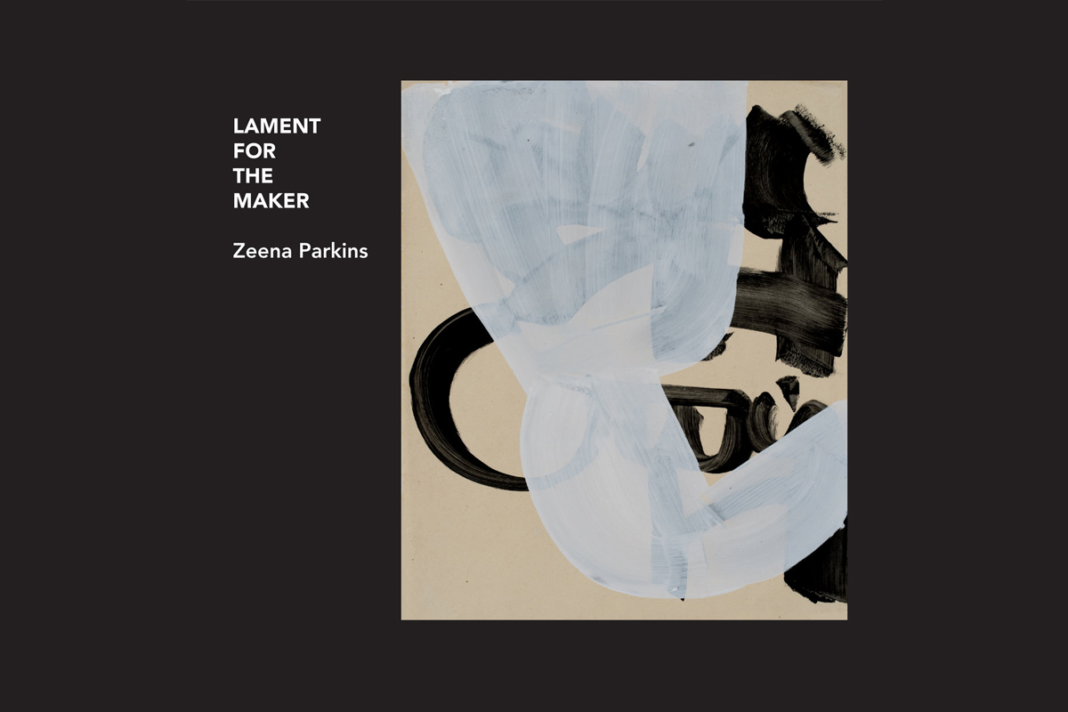
Zeena Parkins – Lament for the Maker
James Fei the composer of ‘In Such Circumstances of Miscalculations’ says he hoped the ‘open aspects’ of the piece would pose ‘musical problems’ that Parkins might find interesting, adding ‘it felt like a continuation of the exchange of ideas we’ve had in the over a decade of teaching together at Mills College’. Small gongs seems to reverberate in the middle section along with some spare keys. Then a studious or bookish passage conjures variously the folding or shuffling of papers, nib against paper or paper being wound through a typewriter and other such acts carried out by those with a penchant for letting the night oil burn, before with ripe melodicism Parkins delivers a lovely summation or peroration on the harp.