


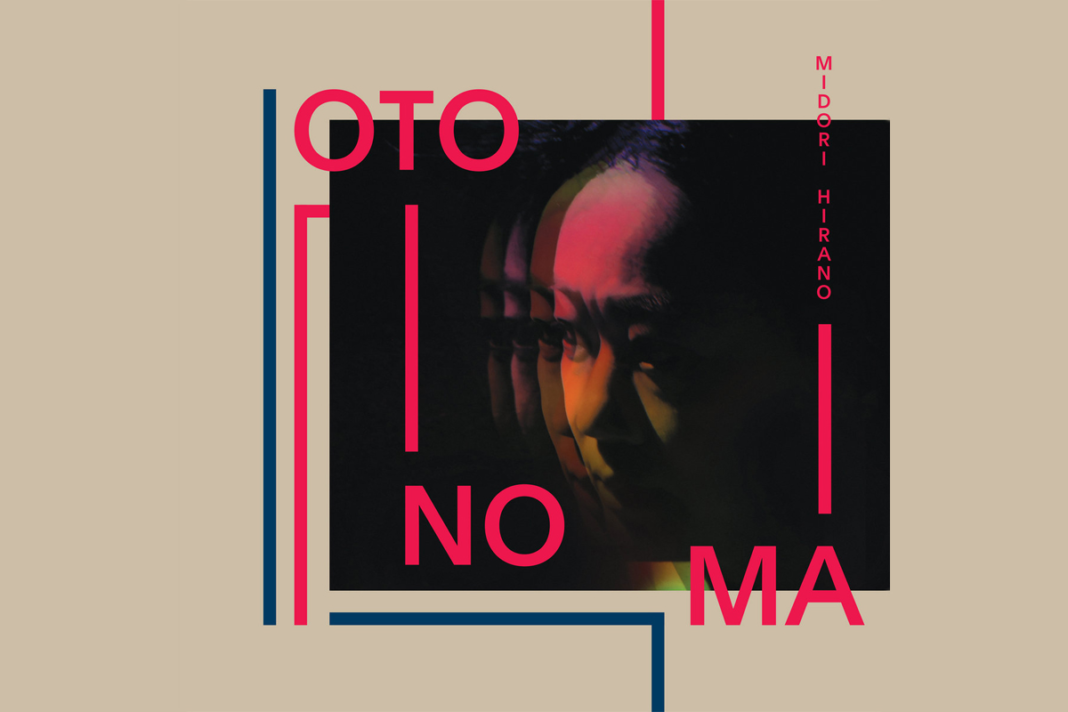
Despite her reflective nature and the restraint of her musical palette, a stirring and textured yet still relatively spare combination of piano and synths, the new album OTONOMA by Midori Hirano takes a good while to unwind, slowly unburdening itself along a series of walkways and brief detours before finding a sense of rest and repose and finally then some real emotional heft.
Hirano has been working slightly under the radar for more than two decades, with her debut album LushRush in the fall of 2006 showing the influence of chamber music and her classical training, a collaborative record where her piano was accompanied by acoustic guitar, violin, viola and cello plus field recordings with a smattering of electronic effects. Klo:yuri a couple of years later instead foregrounded those electronics while adding more of her murmuring vocals to the mix, and as she completed a move from her native Kyoto to Berlin she continued to vamp between collaborative enterprises and personalised solo efforts.
And I Am Here a series of piano snapshots and short field recordings served as something of a breakthrough while her couple of albums for Sonic Pieces bore more of a narrative bent, whether misty and sylvan as though wandering through a drenched forest with its silvery bark and sodden foliage, soupy and foggy with a certain garrulousness by way of her swishing electronic effects, or stranded as though by some newly sentient mirage, a shipwreck on a desert island or a boat still tossing and turning out at sea.
Mirrors in Mirrors presented the listener with a series of roving and rustling, richly evocative vignettes which wound up having a cosmic edge, a project which was mastered by Sean McCann of Recital Program. And in the meantime she reunited with Atsuko Hatano, the violist from her debut album, for the roiling interplay and elegant harmonies of Water Ladder, engaged in a more winsome kind of pastoralism with Brueder Selke for Split Scale, her first release on Thrill Jockey, and partnered with CoH for the stately, shapely and slinky yet surprisingly ebullient Sudden Fruit.
The composer, pianist and electronic producer also performed on a couple of albums as part of the Harp On Mouth Sextet, an ensemble born in Kyoto which offered a contemporary groove-oriented take on gagaku, the traditional imperial court music of Japan. She has completed several soundtrack projects, including for an Amazon documentary about the travails of the 2022 German World Cup team. And all the while she has continued to operate under her solo alias MimiCof, which maintains a more experimental focus, inhabiting a world of occasionally steep drones and fraying loops as she builds out a teeming network of propulsive and decidedly groove-laden rhythms and beats.
Midori Hirano’s music might call to mind the later works of Ryuichi Sakamoto or the darker ambiances and cinematic soundscapes of Ricco Label and its lynchpin band Anoice. Her limpid grooves and silvery melodies might evoke Björk around the time of Vespertine or other influential glitch outfits in the same orbit like the Thomas Knak monicker Opiate or the so-called folk or indietronica outfit múm. Her distinctive blend of piano and synthesizer melds classical and poppier sensibilities, from city pop and the Japanese environmental genre kankyō ongaku to aspects of sound collage and chamber music. Closer to her adopted home there is also a strain of German electronic minimalism, even in the vein of the Berlin bastion Tresor Records which has released defining instances of Detroit techno, electro and dub minimalism by an assortment of artists from Drexciya, Moritz von Oswald and Terrence Dixon to Waajeed and Helena Hauff.
On the album opener ‘Illuminance’ her modular synthesizer sounds submerged, imbuing the piece with a glimmering underwater aspect while her piano chords are more urbane, swelling out there in the gloaming like steam rising from vents in the street. A heavy patter of rain opens ‘Ame, Hikari’ falling almost like sheets, conjuring a split screen alongside her surging yet tremulous synths, some stealthy but still lurching low tones and more spurts of hissing steam. The track whose title components mean ‘rain’ and ‘light’ was originally composed to accompany an exhibition of Rinko Kawauchi photographs at Fotografiska Berlin and to that end deftly balances its two sides while sustaining a surprisingly bristling ambiance.
‘In Colors’ is more of a piano ballad, with a kind of rosy but lovelorn feel as a few distant tremolos and synthetic sounds add spectres to the glass pane of the scene. If the song sounds somewhat melancholy or plaintive, then ‘Warped In Red’ serves as a brusque riposte whether to some offending party or to her own feelings and however briefly compromised sense of self, as it swaps that downcast gaze and those subtly multihued diminuendos for a sweeping curtain of crimson, a strident almost Rothkoesque palette made up of thick and crudding and slightly scuzzy blocks of synth.
Hirano uses variable sequencers and modular synth patches to add a degree of spontaneity and a kind of fraying quality to some of her compositions like ‘Warped In Red’. She notes that in her native Japanese the word ‘oto’ means ‘sound’ while ‘ma’ is the concept of negative space or the ‘space in between’. Her album’s title OTONOMA therefore identifies the space between sounds as her project’s locus or site of interest, while referring to the classical usage of ‘ma’ to refer to a room or at least some kind of legible and purposefully rendered type of space she writes:
I titled the album with the hope that listeners would move through these different spaces of sound as they listen. Like moving through rooms, the album showcases my various sound palettes.
Continuing to oscillate between spaces or spheres, at the midpoint of the album ‘Rainwalk’ finds Hirano more pensive and solitary behind her piano while ‘Blue Horizon’ with its tinged chromaticism evokes a wide-eyed stroll through some futuristic cityscape or a spacewalk full of cosmic blips and beeps. ‘Aurora’ then with its luminous streamers bears a potent and staticky charge.
But the record only really stretches out and relaxes or sags a little into its chair on ‘Before the Silence’ whose brief yet bounding synth motifs push further into the aether, its ringing or droning accents adding to the celestial atmosphere on a song which – like so much of the album – sits somewhere between Interstellar by Frankie Rose and some of Laurel Halo’s recent piano-led ambiances, feeling now like much more of a lucid dream.
After that spell at the steering wheel, a couple of tender closing pieces embrace the restoration that comes through moments of much-needed but decisive rest, with the title of the whirring ‘Otu, Kioko’ suggesting in almost Nabokovian fashion ‘Sound, Memory’ while audibly presenting something like a more upbeat and anthemic take on the David Bowie classic ‘A New Career in a New Town’ before the Satie-esque closer ‘Was It a Dream’ flutters and wafts into the night.