


From the darkness of eternal night, weaving twilight, weaving red through the heat of their voices
They say the ancestors were dancing, singing:
Desnudito, never let the light come / Desnudito, never let the day arrive
Beacause they knew the approaching sunrise brought the mundo en policía (policed world)
Attributed to Aymara oral history, these lines accompanied as a kind of preface an exhibition by the multidisciplinary artist and musician Chuquimamani-Condori at the Centre d’Art Contemporain Genève back in 2022. The exhibit was entitled ‘Across the Policed World: A Transnocturnal Huayño’ and included archival photography and a sound installation pertaining to the artist’s family, meant to embed and provide a historical foundation for what was at the core of the project, the film Amaru’s Tongue: Daughter which featured hand-drawn animation sequences and a score by Chuquimamani-Condori’s brother Joshua Chuquimia Crampton.
Amaru’s Tongue: Daughter was conceived as a ceremony for their late grandmother Flora Tancara Quiñonez Chuquimia and carries the voices of numerous family members from aunts and great aunts to their mother Fanny Tancara Chuquimia Crampton, whose narration recounts aspects of family history and Aymara oral tradition as Flora’s soul completes the three-year-long transition between life and death. This journey or cycle entails the protection of those left behind even as the soul encounters a dog, a condor and a hummingbird as guides to the afterlife, each symbolic figures within the larger body of Aymara myth.
Since their early work such as American Drift under the name Elysia Crampton, the genre-blurring artist Chuquimamani-Condori has steadily explored Aymara culture whether through a lens of anticolonialism (a trait shared with their grandparents who fought for the abolition of the hacienda system in Bolivia in the fifties), references to Aymara mythology or the precipitous use of Andean rhythms. Often these themes and topics crested the wave of texturally dense compositions which might be packed full of hip hop or film samples, woozy layers of synthetic keys or brass and plosive, pummelling or staticky beats.
Yet while previous records came dedicated to Aymara revolutionaries and sometimes also broached American landscapes, immigrant identities and Christian spirituality, since banding together with their brother Joshua under the monicker Los Thuthanaka their shared work has honed in on Aymara culture in terms of genre and instrumentation and motif.
The acclaimed self-titled Los Thuthanaka debut album from last year was described as an ‘ayni’ – a kind of ode or compact based on cooperation and reciprocity – to both their relatives and a dual-gendered Aymara water deity ‘our queer guardian Chuqi Chinchay’. Meanwhile the songs themselves featured a mix of samplers and Tecla assistive technology with more traditional instrumentation, from Joshua’s guitar and bass to the ronroco and bombo drum as the duo drew stylistically from rural folk and ceremonial dance figures like huayno, caporales, whirligig kullawada and festive parrandita.
Those oral histories around sunrise or creation ‘from the darkness of eternal night’ have continued to fascinate and inspire Chuquimamani-Condori and Joshua Chuquimia Crampton. Around the release of their film Amaru’s Tongue: Daughter they headed a series of lectures and conversations under the title Qutax janïr Intix Yurkipänxa or The Lake Before the Sun was Born which interwove oral histories and issues of land use and activism with herbalism and the concept of indigenous spacetime. A subsequent work commissioned by MoMA PS1 once more honoured a family history which stretches back to the time of their great grandparents, who fought for native education and Aymara land titles at a time when the hacienda system in Bolivia was in full force.
Speaking at MoMA PS1 during an indigenous and migrant justice symposium, Chuquimamani-Condori elaborated on the ‘approaching sunrise’ and the ‘mundo en policía’ saying:
The pachanaka, or manifold spacetimes, stained us, jiwasa, before the creation of the World over our mother, the earth. Like titi, we were already stained before Europe arrived to these lands – very speckled, muy pintado, to quote elder Pachacuti again. This is the bittersweet red song, the lonely q’iwa melody, the transnocturnal huayño, the blood-red penumbra that spilled out as the chullpas mistakenly sang the first sunrise, seeing each other for the first time, individuated in sadness and joy, shared aloneness, speaking with tears, our first language: the birth of the mundo en policía, the policed world.
As a concept then the mundo en policía or ‘policed world’ precedes the Spanish conquest and colonial rule but reaches back to something more rooted and profound. In fact both the opening passage which is attributed to Aymara oral history and the symposium quotation from Chuquimamani-Condori – for their repetition and nods to eternity, their evocative landscapes and dancing figures and emphasis on the colour red from the ‘weaving red’ of warm voices to the lyrical yet lonesome ‘bittersweet red song’ – might stir something in readers of Cormac McCarthy for they call to mind the mincing atrocity of the judge especially in the closing pages of Blood Meridian, which is subtitled or the Evening Redness in the West.
No matter, Chuquimamani-Condori in a recent interview with the public radio station WPLN in Nashville further explicated this particular creation myth, summoning a redolent yet fathomless period of:
Everything before there was any time. It’s undifferentiated, like the ocean. And these repetitions start happening. It’s like a humming and the song gets louder and louder and it generates heat and color and it generates so much heat that by accident the star is born. And in that moment when the star’s born, we see each other for the first time. But it’s sad because we’re also separated for the first time. And so there’s that bittersweet moment right before everything’s burned up by the sun.
In recent years the siblings have attempted to collate the various instances of this mythology around the first sunrise or birth of the star. Drawing upon archival transcriptions and some of the versions they have heard from childhood through to the present day, they have now published a fourteen-page booklet under the title Qutax janïr Intix Yurkipänxa (Näyrir Qhanapampix Arumt’awita Wiillirt’ata) which offers a discrete retelling of the myth in the Aymara language, with Chuquimamani-Condori saying ‘I grew up hearing it and our version is an assemblage of every version we could find’.
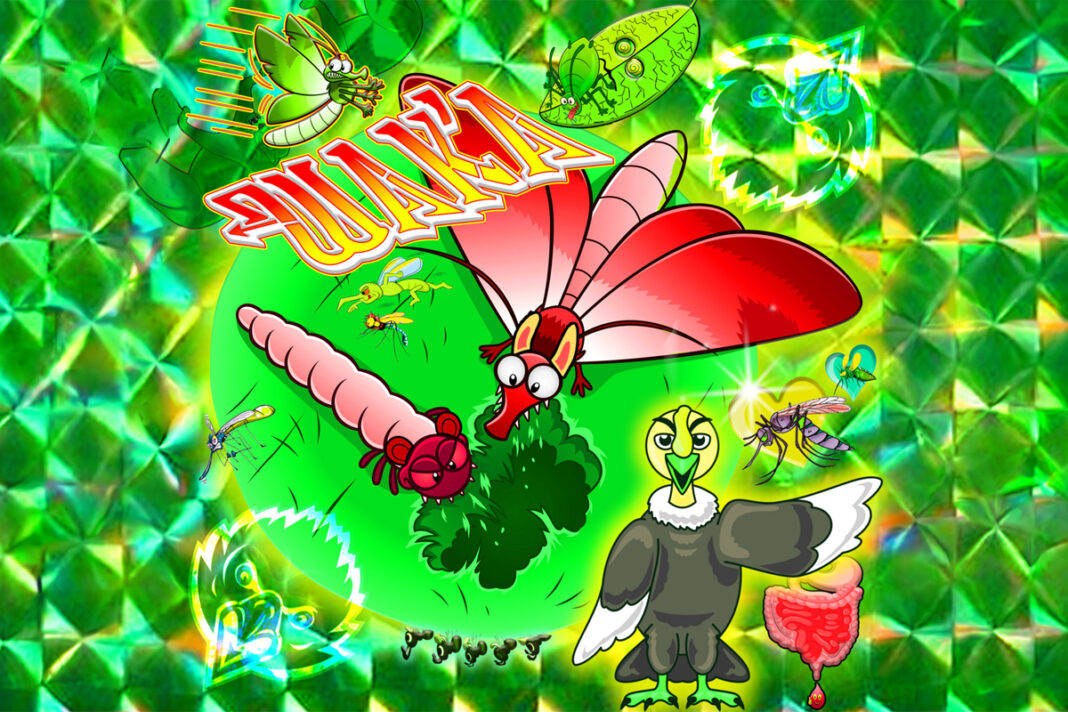
The booklet comes as a PDF packaged inside their new extended play Wak’a, a word they define as encapsulating a split or parting. With translations by Eber Miranda and Shana Inofuentes of Ch’ama: Native Americas, if the use of Aymara might seem to make the story inaccessible then Chuquimamani-Condori has a fitting retort, noting that ‘nobody asks why not in Aymara’ when faced with a text published only in English. Ultimately there is a kind of outreach or compact involved in making the booklet available digitally via the medium in which they have made their name.
While the self-titled Los Thuthanaka leaned into huayno with its high pitches, folk instruments, distinctive stress patterns and interlocking rhythms, the Wak’a extended play is described as three capo-kullawada those high-octane Andean dances which feature boisterous bass instruments and shrill flutes.
Yet compared to Los Thuthanaka and Joshua Chuquimia Crampton’s solo effort Anata – which was released earlier this year and pushed those same rhythms and textures deeper into the red, with more pounding drum patterns from the bombo italaque while he doubled his electric or bass guitar through the metallic tones and phantasms of the charango and ronroco – on Wak’a the duo engage in a lighter kind of revelry that enacts the transition from undifferentiated oceanic darkness to the heat-drenched birth of a star, with all of the drama and ambivalence which that process entails.
The opening track ‘Quta’ sounds almost motorik for the rhythmic insistency of its kullawada pattern, in this case a highly syncopated combination of chugging bass drums and clopping echoes of castanets. Crickets chirp and crunch in the middle distance and woozy keys and strings fill in the gaps between beats, with the atmosphere on ‘Quta’ nocturnal or twilit as cooing or teeming life calls out from the enveloping blackness. It is a heaving and grooving, thick velvety mass of a composition, the drawing open of a curtain onto an effulgent night theatre.
Chuquimamani-Condori again makes use of Tecla assistive technology, a sampler and a CDJ while Joshua wields his guitars, with the opening moments of ‘Wara Wara’ calling to mind the rippling shoegaze of Loveless by My Bloody Valentine even as those fond underlying melodies are splattered and abraded by guttural vocal samples, gothic or doom-laden keys and alien invader blips and beeps. The tune surges and swells with a sound that briefly feels redolent of the eighties, from quiet storm and sophisti-pop to power ballads and yacht rock, or anything really where a soaring if somewhat husky saxophone played a part. In these moments ‘Wara Wara’ reminds me of Romance and their love letters to Celine Dion or collaborative albums with Dean Hurley where cherished samples are sliced and smothered and looped to create something which is emotionally laden yet anthemic or totemic.
Los Thuthanaka though keep crashing forth as ‘Wara Wara’ looses its tethers and takes on countryfied airs or even the tenor of a sloshing sea shanty, rasping and snarling vocals towards the climax producing an effect of rapture and revelry rather than mischief or anything more violent.
Then on ‘Ay Kawkinpachasa?’ they continue in a similar vein, with stomping and squelching barrages of staticky percussion alongside melodic lines redolent of Irish fiddle music. The track is a reworking of the album closer ‘Until I Find You Again’ from Chuquimamani-Condori’s previous solo effort DJ E and entails a kind of open-ended follow-up question – ‘Where will you be?’ – here after the scenic escapades of ‘Lake’ and ‘Star’. If this last stage of the transition sounds mostly triumphant there is a current of turbulence latent within the mix, as before the close the duo conjure in exultant fashion such noises and images as of cannons firing over ramparts and waves slugging against ballast or slamming into the transpiring shore.