


Since the release of 3+3 the formidable cellist Tomeka Reid has appeared on a hat-trick of stunning new albums, personal favourites and contenders for all sorts of accolades, deeply collaborative projects that are up there with some of the best jazz records of the past few years.
As part of the Hemphill Stringtet alongside the violinists Curtis Stewart and Sam Bardfeld and the violist Stephanie Griffin, she helped to make a poignant medley out of ‘My First Winter’ and ‘Touchic’ and woozy matter from the posthumous chugger ‘Choo Choo’. The quartet set down a benchmark with the first studio rendition of ‘Mingus Gold’ whose three movements turned steadily from noirish urbanity to more countryfied airs. On the middle piece ‘Alice in Wonderland’ an improvised cadenza by the cellist contained some of the whimsy and irresistible curiosity of those ‘drink me’ bottles. And it was Reid – alternately playing arco and pizzicato – who carried the five-part motif as the quartet took up Julius Hemphill’s music with great gusto, turning the bluesy tenor of his work with the World Saxophone Quartet into something of a hoedown on the album opener ‘Revue’.
The combination of Reid with the squalling saxophonists Mats Gustafsson and Ken Vandermark plus the limber drummer Chad Taylor – all artists with deep roots in Chicago – proved as thrilling on wax as it appeared on the page. Eight songs sandwiched six improvisational duets on PIVOT, with the cellist plummy and buoyant on ‘The Sensation of Sliding’ and ‘Drops of Sorrow. Accelerating’ then conjuring something like a fiddle or donso ngoni on ‘I am aware. Standing in Snow’. Meanwhile on the album’s mission statement ‘Blowing out from Chicago’ it was her bowed strokes that scuttled the tempo of the piece to diverting ends.
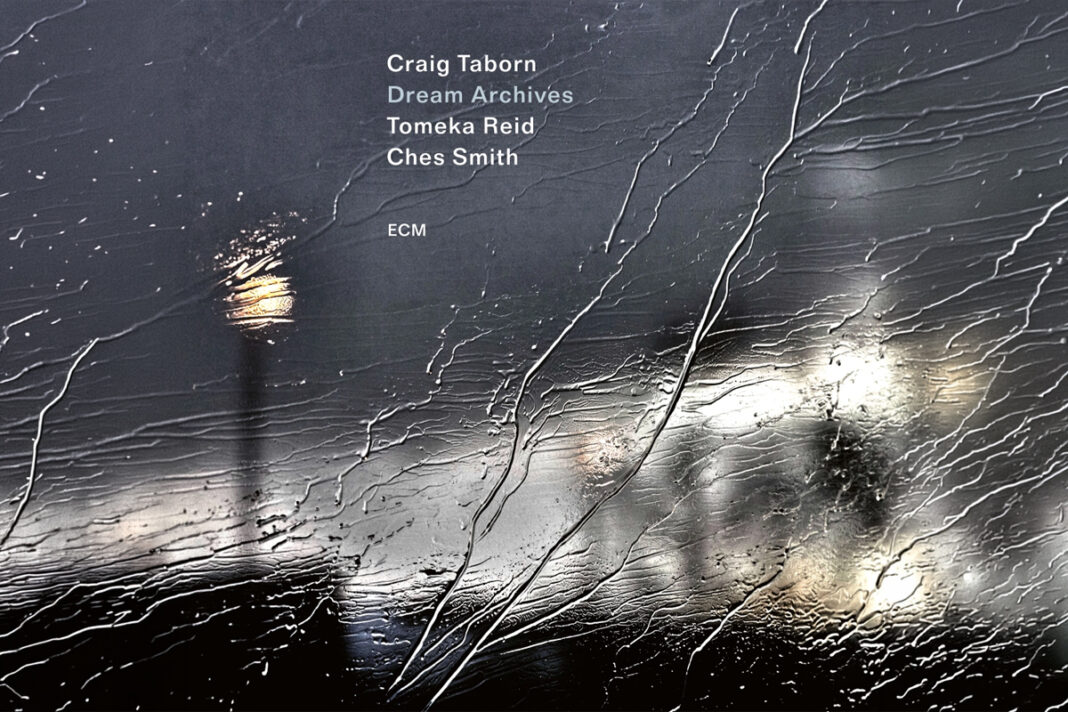
A few weeks ago Dream Archives marked the arrival of an exceptional new trio, with Reid joining the bandleader and keyboardist Craig Taborn while Ches Smith was all over drums and vibes. Here she conjured a sense of foreboding through her trusty vibrato plus a few tremolos and some sul ponticello as she produced sharp harmonics by playing closer to the cello’s bridge. The album featured winning interpretations of songs by Geri Allen and Paul Motian with ‘Enchant’ finally burnishing Dream Archives with feelings of tenderness and hope.
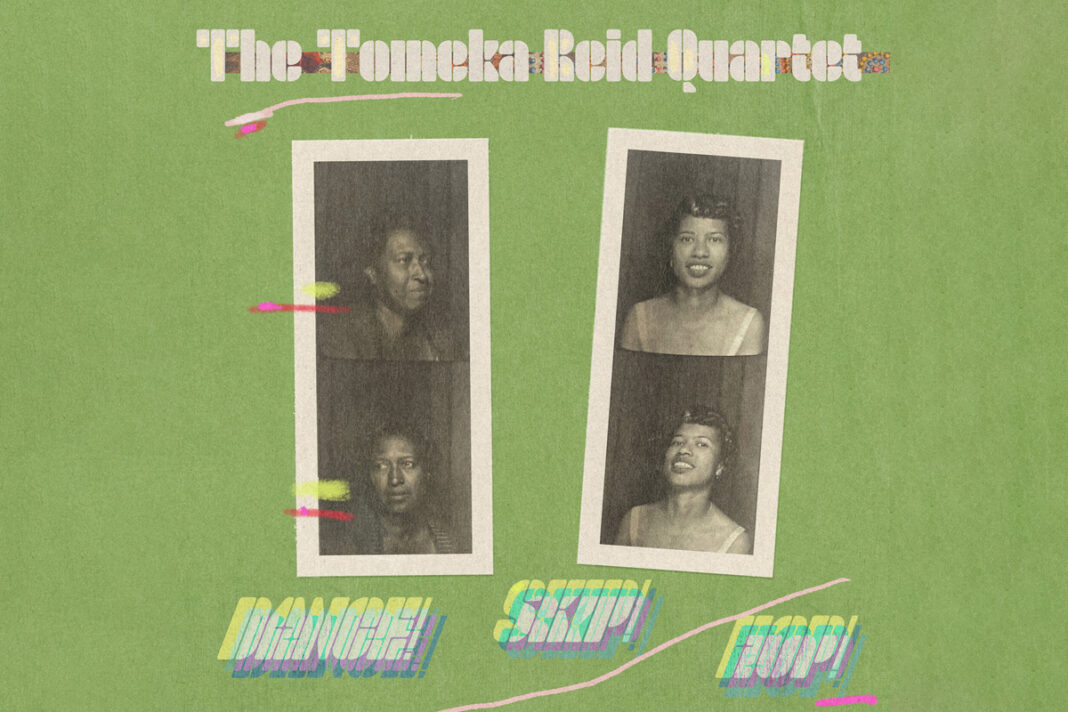
dance! skip! hop! as the fourth studio album by the Tomeka Reid Quartet picks up broadly where 3+3 left off – especially its circuitous and sashaying centrepiece ‘Sauntering with Mr. Brown’. On the opener and title as the drummer Tomas Fujiwara’s brush work and kicks lay down a loosely woven carpet, the string musicians collectively begin to jive. That sense of wandering circuitousness is palpable with Jason Roebke on the bass occasionally exploring a blind alleyway but the companions always find their way back to a shared path. ‘dance! skip! hop!’ can sometimes feel like a silent comedy or a dance scene from a Peanuts holiday special where each performer appears to doing their own thing yet when you draw back it all moves in perfect rhythmic time.
Fujiwara quickens the tempo and Mary Halvorson’s wriggly strums and bends on the guitar imbue the piece with a tilting and staggered quality, a pleasantly jaunty kind of teeter-totter whose slight ungainliness is swept up by the bass. There is some squawking interplay between the drums and the low end of the composition as the percussionist splatters across his kit, then a crescendo over the last two minutes of this rambling ten-minute opener as Roebke warps and waylays the theme while drum rolls and cymbal crashes scatter Reid’s trusty cello and Halvorson’s telling six strings.
‘a(ways) For CC and CeCe’ opens with a more bothered disposition as slapping sticks and the rubbery bleed of Halvorson’s guitar – echoed by the bass – are joined by the bandleader Reid’s long and almost glacial bow strokes across her cello. Halvorson pings and plays some wiry tremolos before Reid conjures the spirit of flamenco during a lengthy standout feature.
When the guitarist comes back in her playing is full of slides and deft fingerings as the drums and bass maintain the heady momentum. In this way the apparent tribute – which is to Clarence James, a longtime supporter of the avant-garde jazz scene in Chicago who frequented the saxophonist Fred Anderson’s club the Velvet Lounge before he passed away in 2018, as well as to Reid’s great aunt Cece who turned ninety last summer – becomes giddy and even euphoric, until just before the close Reid returns to her bow and briefly sounds more folkish or hayseed.
Great aunt Cece plus Reid’s grandmother Estelle and great grandmother Francis Elizabeth Bean feature on the album artwork. All of the titles have an interesting provenance with dance! skip! hop! itself a play on the 2015 record A Dance and a Hop by the Josh Berman Trio of which Roebke is part. ‘Oo long!’ recalls fondly a delicious tea which Reid enjoyed at a small Düsseldorf restaurant and which she still craves having long completed the associated artist’s residency in Moers.
The piece is a real groove as Fujiwara lays down a beat and the bass bends in coverage. Halvorson begins to skim and bob over the top of a clave pattern, and the quartet switch up the rhythm again as Reid throbs in accompaniment, a note of qualm. Together the musicians keep pulling more energy out of the rhythm, its spiralling ascents turning ‘Oo long!’ into something of a heavy metal jam. Then all of a sudden Halvorson cuts through like a chain saw, her virtuoso guitar caked in heavy distortion and related effects.
Tomeka Reid described 3+3 as a suite as she allowed herself to elaborate longer pieces and drew from her extensive background in free improvisation. While she has a strong penchant for lyricism and a kind of swinging old school danceability on that album she also learned to embrace electronics, in accord with Halvorson after previously endeavouring to find acoustic preparations that might replicate the tones and timbres of electronic sounds. Any sense of a dalliance with electronics has now become full-blown cohabitation as Dream Archives saw both Taborn and Smith make extensive use of electronic processing and synthesis whether it was to imbue their instruments with longer decays, to create shrill fragments and garbled communications or to establish faintly oscillating drones.
‘Under the Aurora Sky’ foregrounds those electronics, which produce little twinkles and flickers of radiant light. The bassist Jason Roebke muddies the picture, incorporating lo-fi cassette tapes as the sonic matter shifts from stunning night skies to the sound of gargling water. And as his bass plows on somewhat truculently and Halvorson continues to clad her plucks and pulls in tingling effects, Reid commences a tender and even achingly languorous melody that briefly calls to mind Nat King Cole’s classic rendition of the tearjerker ‘Smile’.
Titled by Reid’s husband, as ‘Under the Aurora Sky’ progresses she manages to summon on her cello sounds redolent of the theremin or ondes Martenot as performed by Christine Ott, especially on a piece like ‘Arctic Passage’ from her album Singing Stones together with Mathieu Gabry as Snowdrops. Here a sense of swing animates the chilly clime, as the drums engage in a cyclical patter while the strings row together despite their differences in texture and gradient. Some glissandos and cello vibrato enhance the queasy yet spectral atmosphere before the quartet build to a dramatic climax.
‘Silver Spring Fig Tree’ lets some of the air out. Halvorson initiates a nice little groove, in the vein of indie rock like say a riff by Modest Mouse. The clopping percussion brings together clave-like patterns and hand drums while the low end steadily emerges as a difference of opinion between more angular passages and drones, offering a more confrontational counterpart to Halvorson’s air of passiveness or latitude.
Wriggling flamenco toques are shared between the guitar and cello and Fujiwara shakes shakers in almost limpid or watery fashion as the quartet shift sediment, playing in the sand. Eventually they settle on a more robust and emphatic version of Halvorson’s opening theme, not quite downcast much less despondent but pendent, waiting things out. Fujiwara’s lively percussion cycles through shakers, drum rolls and tinny cymbals then Reid’s cello peels off and begins to pluck out a melody, which coalesces on the bass into something determined and proud. As they braid and twine it is the cello which finally transforms the composition, the pendency of the guitar and anticipation of the drums finding themselves in complaisant accompaniment to a moment of burgeoning resolution, where the sounds are dulcet and the air feels mellow and hope sprouts.