




Situated about 57 miles east of Pittsburgh in southwestern Pennsylvania, the city of Johnstown has borne three historic floods.
The Great Flood of 1889 after the catastrophic failure of the South Fork Dam killed a record 2,209 people, whereupon the valiant relief efforts of a team of volunteers led by Clara Barton helped to establish the American Red Cross.
Johnstown soon recovered as spurred on by its iron and steel works, through the first decades of the twentieth century the population of the city continued to climb. In the fall of 1923 it made national news for a different reason as following a deadly shootout between a black man and several police officers, the mayor Joseph Cauffiel urged all African American and Mexican residents who had lived in Johnstown for less than seven years to leave the city for their own safety. His order was enforced and the occasion retains local infamy as the Rosedale Banishment.
More fatal flooding deluged Johnstown in 1936 and 1977, while the collapse of the steel industry meant that by the turn of the twenty-first century, national census data identified Johnstown as the least likely city to attract newcomers across the entire United States. The population remains on a steady decline despite the city’s strong health and defence sectors, the presence of the University of Pittsburgh at Johnstown which furnishes the area with a few thousand students, the annual Flood City Music Festival which began life in 1989 to commemorate the one-hundredth anniversary of the great flood plus Thunder in the Valley, a major motorcycle rally held on the fourth weekend of June.
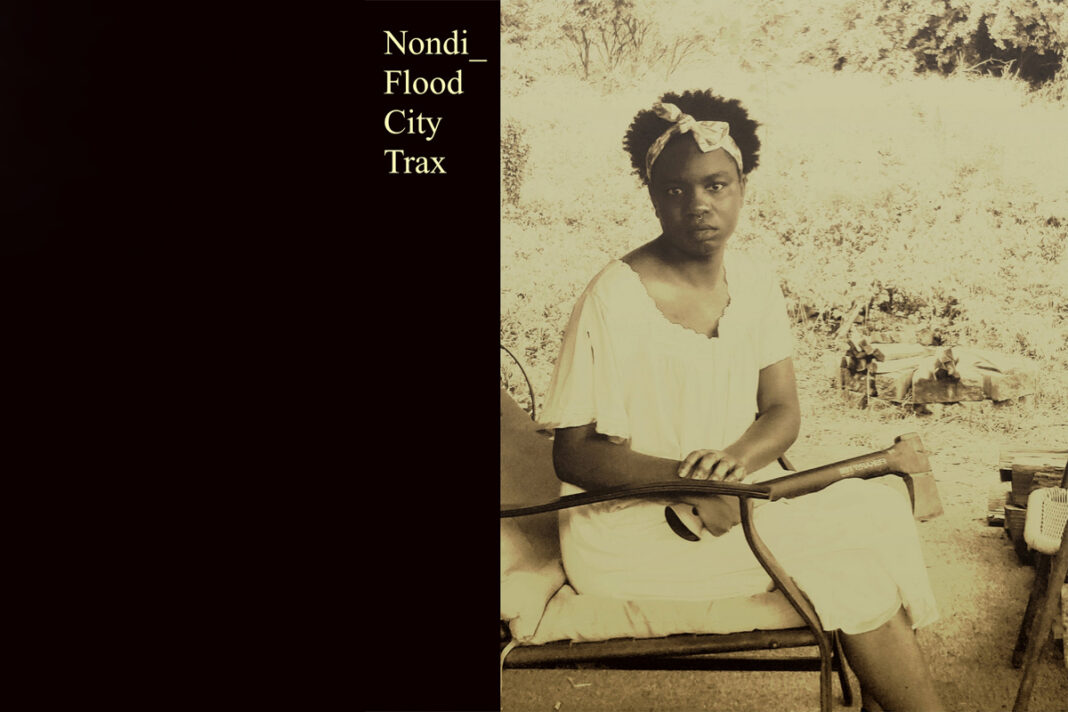
Stranded on an island, wading through the debris or erecting her own private fort out of the flotsam and jetsam washed up from a series of floods, the Johnstown producer Tatiana Triplin has hitherto helmed the art collective and internet label HRR, which claims to specialise in web folk, nightcore and dubst and has played host to her own musical projects whether as Nondi_ or Crushing Union, a purported collaboration between Triplin and Laura C.
Web folk, nightcore and dubstep broadly amount to sped-up or slowed-down and therefore pitch-shifted takes on house and techno, or more particularly the hardcore techno subgenres of breakcore and gabber plus deviations from Detroit and Chicago in the vein of ghettotech and juke. This might produce eerie refrains and a kind of somnambulist pressure, spectral or crudding dirges or simply discombobulated electronic music with half a foot still in the club. Yet while these sounds are filtered through an archive of online aesthetics, nightcore in particular shares a hyperpop sheen while deriving much of its imagery from Japanese anime and otaku culture.
Now as Nondi_ for her debut album on Planet Mu, the artist pays skewed homage to the poverty and disintegrating history of her city, embracing the genres of footwork, breakcore and Detroit techno from the impervious remove of small-town Pennsylvania, using the internet and her dreamlike imagination to fill in those spatial and temporal gaps.
On the twelve pieces which make up Flood City Trax the result feels at once discrete and redolent of a twenty-first century electronic architecture, from the glitch warmth and slow-wound music box melodies of the Icelandic outfit múm to the atmospheric onslaught of Vladislav Delay or from the dizzying percussion and hyperreal Chicago-adjacent fabrications of Jlin to the Afrohouse mutations, skeletal rhythms and tarraxinha stickiness of the Congolse club sensualist Chrisman.

