


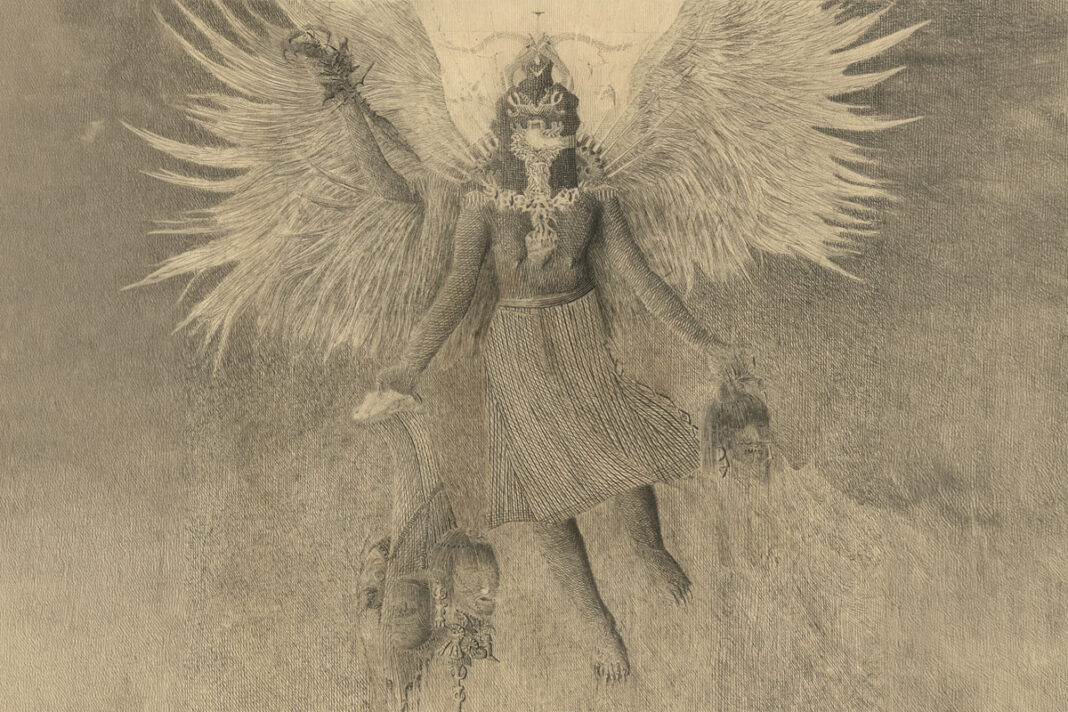
Dras by Alex Zhang Hungtai possesses a furtive charge. The musician’s debut on the Shelter Press is essentially an album of droning and digitally processed saxophone, with Zhang and the listener entwined as we seem to traverse a mass of copper wires which glint menacingly in the dark. The purpose and the direction of travel seems uncertain, with the skulking and teetering drones of the engrossing opener ‘Erg’ and the shorter title track altogether uncanny and even at times appearing to possess some kind of predatory intent.
The nine tracks were captured in 2019 inside of Saint Joseph’s Oratory in Montreal. The church is a minor basilica and a national shrine with its massive dome helping to make it the largest church in all of Canada as well as the tallest building in Montreal. Yet despite this monumental scale – which incorporates a grand Beckerath organ, a carillon and a lively concert programme – Zhang put the recording he made there to one side, allowing it to lay dormant or perhaps better to say latent on his hard drive for several years during the pandemic.
Returning to the work, one might find that is imbued with the carnivalesque much like some of his earlier output as Dirty Beaches, for instance on the double album Drifters/Love is the Devil where frayed or decaying electronics and guitar summoned up spectres of the past with a fairground quality, like a shimmering funhouse or queasy hall of mirrors. ‘El Khela’ certainly shares a certain DNA with Kraftwerk and their ‘Showroom Dummies’ or ‘Hall of Mirrors’ even as Zhang’s treated saxophone begins to sound like other drone instruments with more of a local character, like the bagpipe or the tanpura which in Hindustani classical music roots and anchors the raga.
At these moments those coiled and bronzed figures or that clandestine realm of copper-wire data management seem to recede or coalesce into something more monolithic. Yet on ‘Xilitla’ the artist shows some levity without quite breaking out into a smile. We still get the buzzing of the tanpura, as the saxophone continues to sound like that drone instrument without the sweeter melodic aspects of the sarod or sitar, but the tone begins to sound less encompassing and more reflective, tracing now other wind traditions like that of the Hungarian folk tárogató or even something of David Bowie and his Berlin period classic ‘A New Career in a New Town’. The slithering, serpentine aspect of the first few compositions now seems to coil back on itself.
‘Estado’ – the Spanish word for ‘state’ on an album of shifting languages and dual meanings, with the aforementioned ‘Erg’ both a unit of energy and a windblown sand sea while other tracks posit Mexican beverages, dense star remnants or similar desert terrains – fittingly presents a steep edifice. The music is impenetrable and austere as much in the manner of Soviet brutalism, perhaps carried into the modern age through the sound of drones flying overhead.
‘Rub’ Al Khali’ slips back to that early charge with more of a glimmer and hum while ‘Pulque’ once again draws in murky fashion upon some of Zhang’s earlier rock inflections, including the drones and overtones of guitar feedback and Suicide-adjacent electronic minimalism in a manner that reminds me of a contemporary or kindred spirit in the form of the Stygian oarsman Bobby Would.
The penultimate piece ‘White Dwarf’ sounds almost like processed gongs but despite the nod to shared ritual or spiritual awakening, still for the moment Zhang gives nothing away. But the album closer ‘Mazil’ is a big belching drone that seems to summon or spit out a swampy orchestra, mournful and dirge-like but yet another small nod to some kind of collectivism or shared spirit of communality as Dras doggedly keeps its head above the mire.